Is There a Congestion Charge on Sunday: Complete London Weekend Driving Rules
Find out when London's Sunday Congestion Charge applies, how much drivers pay, which vehicles qualify for discounts, and how ULEZ and bank holiday rules affect your journey.
 Hannah
London Lifestyle & Consumer Writer
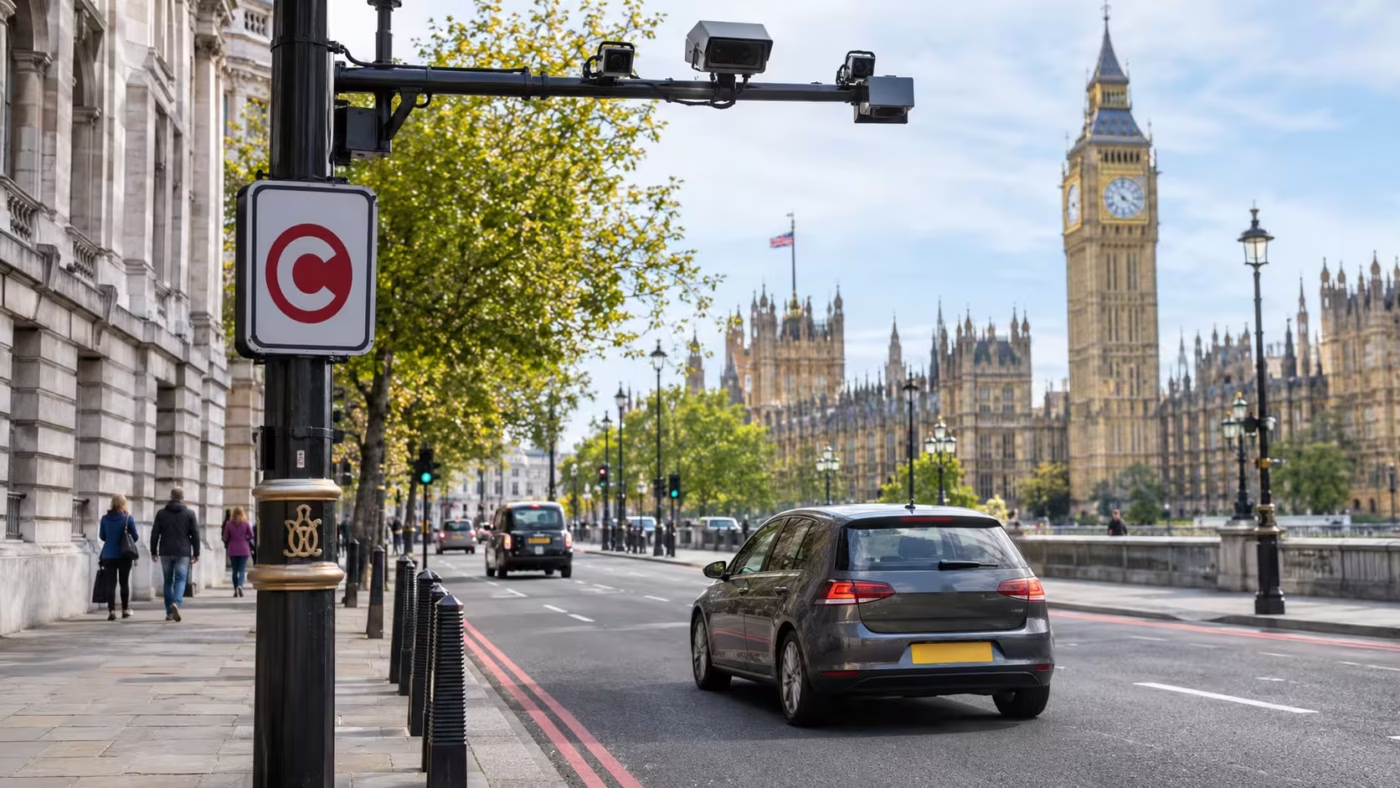
Yes, there is a Congestion Charge on Sunday in London. The charge normally operates from 12pm to 6pm on Sundays, as well as on Saturdays and bank holidays.
The standard daily charge is £18 when paid in advance or on the day of travel. If you pay by midnight on the third day after travelling, the charge rises to £21.
For drivers planning journeys in 2027, £18 is the latest published standard rate at the time of writing.
Transport for London has not confirmed a separate higher standard charge for 2027.
TfL has, however, introduced a framework that allows future increases to be considered, so motorists travelling later in 2027 should check the current tariff before driving.
| Other Sunday Charging Details | Current Position |
| Electric Car With Auto Pay | £13.50 under the current Cleaner Vehicle Discount |
| Electric Van, HGV Or Quadricycle With Auto Pay | £9 under the current discount |
| Christmas Suspension | No Congestion Charge from Christmas Day through the New Year’s Day bank holiday, inclusive |
Drivers should also remember that the London Congestion Charge and ULEZ are separate schemes.
A journey made outside Sunday Congestion Charge hours could still attract a ULEZ charge if the vehicle does not meet the required emissions standard.
How Does Sunday Congestion Charge Timing Work in Practice?
The key point for Sunday journeys is when the vehicle is actually driven inside the Congestion Charge zone, not simply what time the overall journey begins.
For example, a driver could enter central London before the charging period starts, park the vehicle, and then drive again later in the day.
If that later journey takes place during chargeable hours, the Congestion Charge may apply.
Likewise, starting a journey outside the zone before the charging period does not automatically avoid the charge if the vehicle enters or is driven within the zone while charging is in operation.
This is particularly important for visitors who may arrive in central London in the morning, spend several hours parked, and then move the vehicle again later in the afternoon.
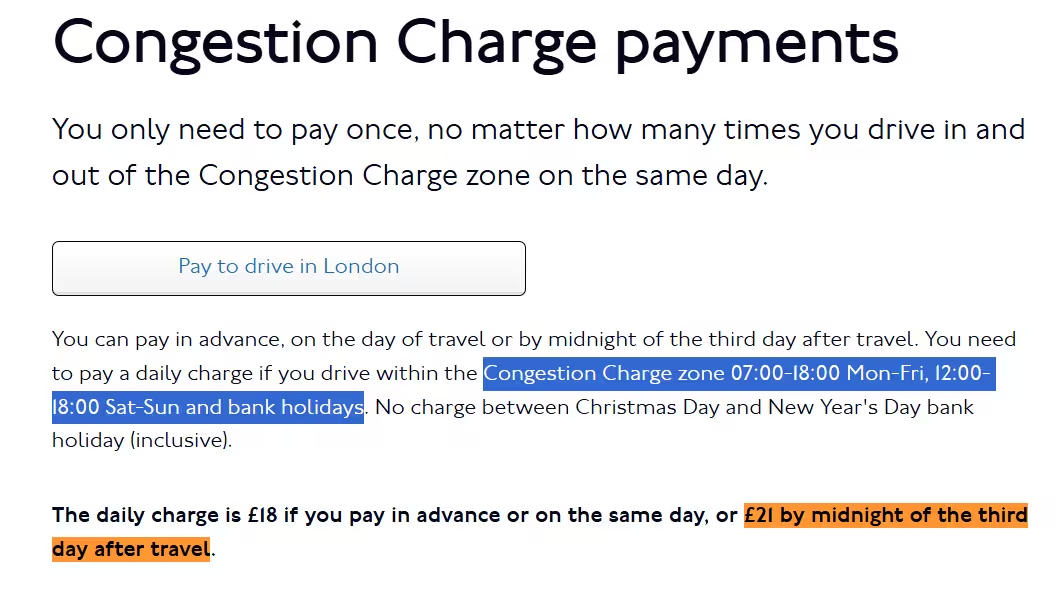
TfL’s payment page confirms the official charging periods and helps drivers check when a journey falls within chargeable hours.
Is It Free Before 12pm and After 6pm?
The Congestion Charge itself does not normally apply before 12pm or after 6pm on Sunday.
However, this does not mean driving in London is necessarily free outside those hours. ULEZ operates separately, and other road-user charges can apply depending on the vehicle and route.
TfL’s ULEZ currently operates 24 hours a day, every day except Christmas Day. A non-compliant car, motorcycle, van or other eligible light vehicle is generally subject to a £12.50 daily ULEZ charge.
How Much Is the Sunday Congestion Charge in 2026 and 2027?
The standard London Congestion Charge is £18 per charging day in 2026 when payment is made in advance or on the day.
The price increased from £15 to £18 in 2026, representing a 20% rise. TfL also increased the later-payment amount from £17.50 to £21.
For anyone researching the broader cost structure, the current London Congestion Charge prices and 2027 rule changes cover how the increase affects standard vehicles, electric vehicles and residents.
| Payment Or Vehicle Type | 2026 Charge | 2027 Position |
| Standard Advance Or Same-Day Payment | £18 | £18 is the latest published rate |
| Payment By Midnight On Third Day After Travel | £21 | £21 is the latest published rate |
| Eligible Electric Car On Auto Pay | £13.50 | Current published discount |
| Eligible Electric Van On Auto Pay | £9 | Current published discount |
| Eligible Electric HGV Or Quadricycle On Auto Pay | £9 | Current published discount |
TfL confirms that drivers only need to pay the Congestion Charge once for a charging day, even if the same vehicle enters and leaves the zone several times that day.
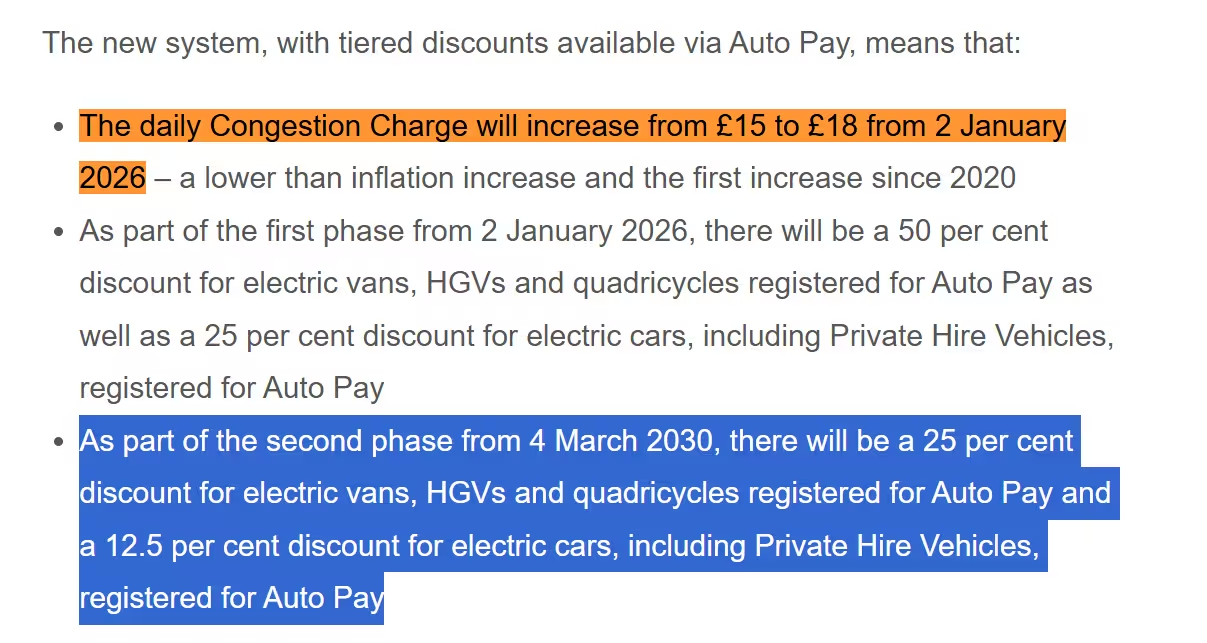
TfL’s confirmed changes show the £18 charge introduced in 2026, electric-vehicle discounts and the Residents’ Discount change taking effect in 2027.
Latest 2027 Congestion Charge Position
TfL’s current published Congestion Charge information continues to list the standard charge as £18. No separate higher standard daily price for 2027 has yet been confirmed.
This distinction matters because TfL has changed the process through which future increases can be considered.
That makes another rise possible, but a possible future adjustment should not be reported as though it is already an approved 2027 price.
The confirmed 2027 development concerns the 90% Residents’ Discount.
From March 2027, new applicants will generally only be able to receive the 90% Residents’ Discount for an eligible electric vehicle.
People already receiving the discount before the change can retain it regardless of fuel type, subject to continuing to meet TfL’s requirements.
Additional arrangements are available for certain low-income and disabled residents receiving qualifying benefits.
For a 2027 journey, motorists should therefore use £18 as the latest published standard figure, while checking TfL again close to their travel date.
Where Does the Sunday Congestion Charge Apply in London?
The Congestion Charge applies to a defined area of central London, rather than the whole of Greater London.
Whether a Sunday journey is chargeable depends on the route, location and time. Simply driving somewhere in London does not automatically mean the Congestion Charge is payable.
The zone includes substantial parts of central London, but its boundary does not follow borough or postcode boundaries perfectly.
This makes an address-level check more reliable than assuming that an entire neighbourhood is inside or outside the zone.
TfL provides a postcode and address checker, and drivers can also examine the charging-zone map before travelling.
Anyone unsure about a particular destination can check the Congestion Charge by postcode, vehicle and payment status before setting off.
This is especially useful for visitors, delivery drivers and motorists heading to an unfamiliar part of central London.
A journey may also pass through the Congestion Charge zone even when the final destination is outside it. Checking the complete route is therefore more useful than checking the destination alone.
What Is the Difference Between the Congestion Charge and ULEZ on Sunday?
The Congestion Charge and ULEZ are different London road-user charging schemes.
The Congestion Charge mainly targets traffic and congestion in central London. ULEZ is an emissions-based scheme covering a much larger area across all London boroughs, excluding the M25.
| Rule | Congestion Charge | ULEZ |
| Main Purpose | Manage central London congestion | Reduce vehicle emissions |
| Sunday Operation | 12pm to 6pm | 24 hours |
| Geographic Area | Central London zone | All London boroughs, excluding M25 |
| Standard Relevant Charge | £18 | £12.50 for non-compliant eligible vehicles |
| Christmas Day | No charge | No charge |
A driver with a non-compliant car entering the Congestion Charge zone at 2pm on Sunday could therefore be liable for both charges, producing a potential total of £30.50 for that day.
Conversely, the same non-compliant car driven through a ULEZ area at 8pm on Sunday could avoid the Congestion Charge because it is outside Sunday operating hours while still attracting the £12.50 ULEZ charge.
Understanding whether you need to pay the London Congestion Charge is therefore only one part of planning a journey. The vehicle’s ULEZ status should be checked independently.
Visitors arriving by air should also treat airport fees separately.
For example, the Heathrow drop-off charge is independent of ULEZ and the central London Congestion Charge, so paying one does not automatically cover another.
What Discounts and Exemptions Are Available and How Do You Pay?
Not every vehicle pays the full £18 Sunday Congestion Charge.
Under the 2026 rules, eligible electric vehicles registered with Auto Pay receive a revised Cleaner Vehicle Discount.
An eligible electric car receives a 25% discount, reducing an £18 charge to £13.50. Eligible electric vans, HGVs and quadricycles receive a 50% discount, reducing the charge to £9.
This is important for electric-car owners because the previous full Cleaner Vehicle Discount has ended.
An electric vehicle should no longer be assumed to be automatically free from the Congestion Charge.
Other discounts and exemptions are available for qualifying motorists and vehicles, including certain Blue Badge holders and eligible residents.
Registration or approval may be required, so drivers should not assume that eligibility is automatic.
Paying Before, On the Day or After Your Journey
TfL currently allows several payment options:
- Pay In Advance: Payment can be made up to 90 days before travel
- Pay On The Day: The standard charge is £18
- Use Auto Pay: Applicable charging days are recorded and billed automatically
- Pay After Travelling: The charge becomes £21 when paid by midnight on the third day after travel
- Miss The Deadline: Failure to pay by the deadline can result in a Penalty Charge Notice
TfL advises motorists to use its official payment services rather than unofficial websites that may add fees or provide misleading information.
A London road-user charging PCN is also different from an ordinary council or private parking notice.
Drivers dealing with a parking-specific penalty should follow the appropriate UK parking ticket appeal process rather than assuming the same procedure applies to every type of PCN.
Does the Congestion Charge Apply on Bank Holidays and Christmas?
The Congestion Charge normally operates from 12pm to 6pm on bank holidays, using the same hours as Saturday and Sunday.
Christmas and New Year are different.
TfL confirms that the Congestion Charge does not operate from Christmas Day through the New Year’s Day bank holiday, inclusive.
This means a Sunday falling within that Christmas-to-New-Year suspension would not follow the normal 12pm–6pm Sunday charging rule.
ULEZ has a different holiday arrangement. It does not operate on Christmas Day, but resumes afterwards, while the Congestion Charge remains suspended through the New Year’s Day bank holiday.
That distinction is particularly important for drivers visiting London during the festive period.
How Does London Compare With Other Popular UK Cities?
London’s Sunday Congestion Charge should not be treated as a standard model for every UK city. Birmingham, Manchester and Edinburgh have different approaches to road charging and emissions enforcement.
London vs Birmingham
London charges most applicable vehicles for driving within the central Congestion Charge zone during specified operating hours.
Birmingham instead operates a Clean Air Zone focused on vehicle emissions.
Birmingham City Council says its zone operates 24 hours a day, seven days a week, 365 days a year, with non-compliant vehicles potentially required to pay a daily charge.
Therefore, a Sunday journey that takes place before midday can be outside London’s Congestion Charge hours while still being subject to Birmingham’s Clean Air Zone rules if made in Birmingham with a non-compliant vehicle.
London vs Manchester
Greater Manchester currently takes a different approach.
The official Greater Manchester Clean Air Plan states that there are no clean-air charges to drive anywhere in Greater Manchester.
Its current strategy relies on cleaner buses, taxis and other transport measures rather than a charging Clean Air Zone.
That makes Manchester fundamentally different from London’s central Sunday Congestion Charge.
London vs Edinburgh
Edinburgh operates a Low Emission Zone rather than a London-style Congestion Charge.
The Edinburgh LEZ operates 24 hours a day, 365 days a year. Drivers using vehicles that fail the required emissions standards can receive a Penalty Charge Notice when they drive within the zone.
The key distinction is that Edinburgh’s LEZ uses emissions compliance and enforcement rather than London’s standard daily congestion fee.
| City | Sunday Position | Type Of Scheme |
| London | Congestion Charge 12pm–6pm | Congestion Charging |
| Birmingham | Operates 24 Hours | Clean Air Zone |
| Manchester | No Charging Clean Air Zone | Investment-Led Clean Air Plan |
| Edinburgh | LEZ Operates 24 Hours | Low Emission Zone |
For visitors travelling between UK cities, the safest approach is to check the local scheme rather than assuming that London’s Sunday rules apply elsewhere.
Conclusion
Yes, there is Congestion Charge on Sunday in London, with normal Sunday operating hours running from 12pm until 6pm.
The standard charge is £18 when paid in advance or on the day, while payment made by midnight on the third day after travel costs £21.
For 2027 planning, £18 remains TfL’s latest published standard figure, with no separate higher standard rate confirmed at the time of writing.
Drivers should still check the exact route, vehicle, latest TfL tariff and any applicable discounts before travelling.
ULEZ must also be considered separately because its Sunday operating hours and vehicle requirements differ from the Congestion Charge.
Planning the journey around the correct Sunday hours can prevent unnecessary charges, but travelling outside Congestion Charge hours does not automatically mean every London road-user charge has been avoided.
FAQs About the Sunday Congestion Charge?
Is There Congestion Charge on Sunday in London?
Yes. The London Congestion Charge normally operates from 12pm to 6pm on Sundays.
What Time Does the London Congestion Charge Start on Sunday?
The Sunday Congestion Charge starts at 12pm midday and normally continues until 6pm.
Is the Congestion Charge Free After 6pm on Sunday?
The Congestion Charge does not normally apply after 6pm on Sunday, although ULEZ and other road-user charges may still apply.
How Much Is the Sunday Congestion Charge in 2026?
The standard charge is £18 when paid in advance or on the day. Paying by midnight on the third day after travel costs £21.
How Much Will the Congestion Charge Be in 2027?
£18 is the latest published standard rate at the time of writing. TfL has not confirmed a separate higher standard charge for 2027.
Do Electric Cars Pay the Congestion Charge on Sunday?
Yes. Eligible electric cars on Auto Pay currently receive a 25% discount, reducing the £18 daily charge to £13.50.
Does ULEZ Apply on Sunday in London?
Yes. ULEZ operates 24 hours a day on Sundays, except on Christmas Day. Non-compliant eligible vehicles currently face a £12.50 daily charge.
Hannah is a London lifestyle and consumer writer at London Insider News, covering property, transport, local developments, cost-of-living issues and stories affecting everyday life across the capital.
More from TRANSPORT
Do Electric Cars Pay Congestion Charge in London? | 2027 Rules Explained
Yes, electric cars must now pay the London Congestion Charge. Since 2 January 2026, fully electric…
London Congestion Charge Times 2027: Daily Hours, Weekends and Free Driving Periods
The London Congestion Charge times are 7am to 6pm from Monday to Friday and 12pm to…
How Much Is London Congestion Charge in 2027? Daily Costs, 2026 Price Rise and New Rules
The London Congestion Charge is £18 per day for most drivers entering the central London charging…