Gatwick Drop Off Charge 2026: Costs, Payment Rules, Fines and Free Alternatives
The Gatwick drop off charge increased to £10 in 2026, with fees reaching £30 for 30 minutes. Discover how to pay, avoid £100 parking charges, claim eligible exemptions and use free airport drop-off alternatives.
 Hannah
London Lifestyle & Consumer Writer

Dropping someone off at Gatwick Airport now costs a minimum of £10 when using the designated terminal forecourt. The Gatwick drop off charge increased from £7 to £10 on 6 January 2026, representing a 42.9% rise for motorists using either the North or South Terminal.
Although drivers receive up to 10 minutes for the initial payment, additional minutes cost £1 each, with a maximum charge of £30 for a permitted 30-minute visit.
Our analysis of published airport tariffs, payment conditions and transport costs highlights an important consideration: motorists do not necessarily need to pay the terminal drop-off fee. Gatwick offers two hours of free parking in its Long Stay car parks, together with a complimentary terminal shuttle service.
Understanding these arrangements is particularly useful for families, business travellers, taxi operators and motorists unfamiliar with Gatwick’s barrierless payment system.
How Much Is the Gatwick Drop Off Charge in 2026?
The standard Gatwick drop off charge is £10 for the first 10 minutes at both terminals. Drivers staying beyond that period pay an additional £1 for each extra minute, up to a maximum charge of £30.
The airport operates the same charging structure at North Terminal and South Terminal, regardless of whether the journey involves a private car, taxi or another non-exempt vehicle.
| Parking duration | Gatwick drop-off charge |
|---|---|
| Up to 10 minutes | £10 |
| 11 minutes | £11 |
| 15 minutes | £15 |
| 20 minutes | £20 |
| 25 minutes | £25 |
| 30 minutes | £30 |
| Maximum permitted stay | 30 minutes |
| Payment deadline | Midnight the following day |
| Free alternative | Long Stay parking, up to 2 hours |
The amounts above illustrate completed whole-minute stays using the published tariff.
Importantly, £30 is the published maximum charge, not permission to remain in the designated zone beyond 30 minutes.
The initial £10 is payable even when a driver spends only two or three minutes unloading luggage. There is no general free grace period for entering the terminal drop-off forecourt.
The tariff applies 24 hours a day, including weekends and bank holidays. Arriving late at night or outside normal working hours does not remove the payment requirement.
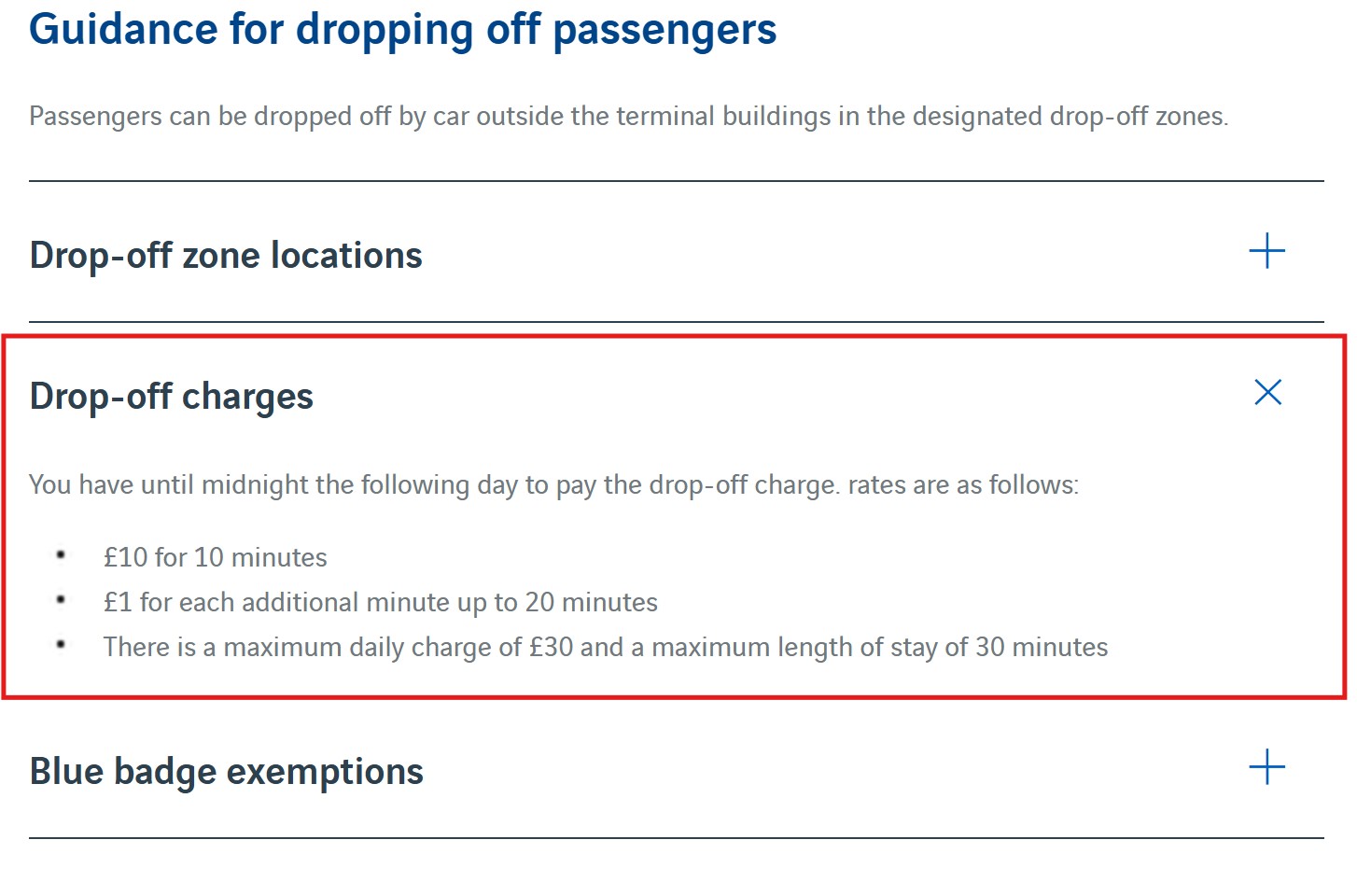
Gatwick Airport’s official drop-off tariff confirms the £10 minimum charge, additional £1-per-minute rate and 30-minute maximum stay.
Why Did the Gatwick Drop Off Charge Increase to £10?
Gatwick increased its minimum drop-off fee on 6 January 2026, following several earlier price adjustments.
The airport originally introduced terminal drop-off charging in 2021, with a minimum fee of £5. The price subsequently increased to £6 in 2024 and £7 in May 2025.
The latest increase means motorists now pay twice the original £5 amount.
| Period | Minimum drop-off charge | Change |
|---|---|---|
| 2021 | £5 | Original charge |
| 2024 | £6 | 20% increase |
| May 2025 | £7 | 16.7% increase |
| January 2026 | £10 | 42.9% increase |
| Overall change since introduction | £5 to £10 | 100% increase |
Gatwick attributed the January 2026 increase partly to rising operating expenses, including a substantial increase in its business rates.
The airport also linked the charging policy to managing congestion around terminal entrances and supporting more sustainable transport.
Part of the published drop-off tariff includes a public transport levy, which contributes to transport initiatives at the airport.
From a business and consumer finance perspective, however, the most significant issue is the cumulative expense.
A family making four separate charged drop-offs annually would spend at least £40, compared with £28 under the previous tariff.
For a taxi company or airport transfer operator making hundreds of journeys, the increase has a substantially greater financial impact.
The charge is therefore more than a small addition to an individual airport journey. It is a recurring transport cost that needs to be considered alongside fuel, parking, travel time and airport transfer fares.
How Does the Gatwick Drop Off Charging System Work?
Gatwick uses Automatic Number Plate Recognition (ANPR) technology to manage its designated terminal drop-off areas.
Unlike traditional car parks, drivers do not stop at a payment barrier or collect a parking ticket when entering the forecourt.
Cameras record vehicle registration details and calculate the applicable charge using the vehicle’s time in the designated area.
The process normally works as follows:
- Drive towards the correct Gatwick terminal.
- Follow signs identifying the designated drop-off zone.
- Enter the area, where cameras record the vehicle registration.
- Stop within an authorised drop-off bay.
- Allow passengers to unload their belongings.
- Leave the zone within the permitted time.
- Pay the calculated charge using an authorised payment method.
A common misunderstanding is that payment only becomes necessary when a driver stops to unload passengers.
However, the charging system records vehicle entry into the designated forecourt. Entering an incorrect drop-off zone and driving through without unloading does not automatically cancel the payment obligation.
Motorists should therefore confirm their terminal before following the airport’s drop-off signs.
The airport’s road network also includes red routes, where stopping, unloading and waiting are prohibited.
Trying to avoid the forecourt fee by stopping on a nearby restricted road can result in a separate enforcement charge.
Where Are the Gatwick North and South Terminal Drop Off Zones?
Both terminals have dedicated drop-off areas close to their main entrances, but the routes and surrounding parking facilities are different.
Gatwick North Terminal Drop Off
The North Terminal drop-off area is located on the lower level between the Sofitel hotel and the multi-storey car park.
Drivers approaching from London or Brighton should leave the M23 at Junction 9 and follow the signs for Gatwick Airport.
At the airport approach, continue towards North Terminal and follow the marked drop-off route.
The forecourt is designed for passengers making a quick transfer from vehicle to terminal.
Passengers with heavy luggage should prepare their belongings before arrival wherever possible, reducing the time needed in the chargeable area.
Gatwick South Terminal Drop Off
The South Terminal drop-off area is also situated on the lower level outside the terminal building.
Drivers should use M23 Junction 9, follow signs towards South Terminal and continue along the designated Drop Off route.
The charge is identical to that of North Terminal.
South Terminal also houses Gatwick Airport railway station, making it particularly relevant to travellers using rail connections.
Passengers changing between North and South Terminals can use the airport’s free inter-terminal shuttle, which operates throughout the day and night.
| Feature | North Terminal | South Terminal |
|---|---|---|
| Drop-off location | Lower-level forecourt | Lower-level forecourt |
| Minimum charge | £10 | £10 |
| Maximum stay | 30 minutes | 30 minutes |
| Free Long Stay option | Available | Available |
| Short Stay parking | Car Parks 5 and 6 | Car Parks 1, 2 and 3 |
| Terminal access | Direct from drop-off area | Direct from drop-off area |
Drivers should always follow the current airport road signs rather than relying solely on an old satnav route.
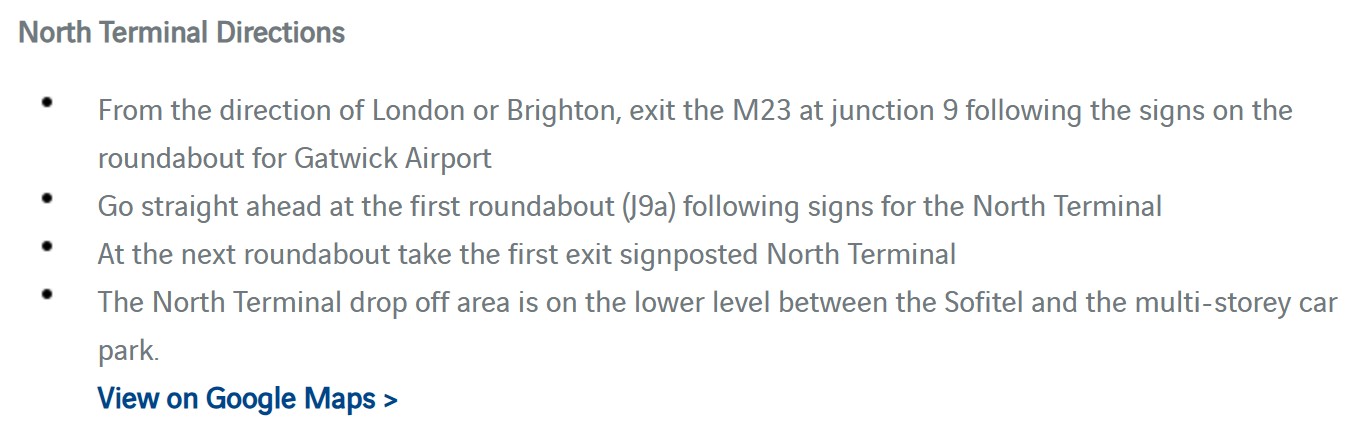
Official directions show the Gatwick North Terminal drop-off zone between the Sofitel and multi-storey parking facilities.
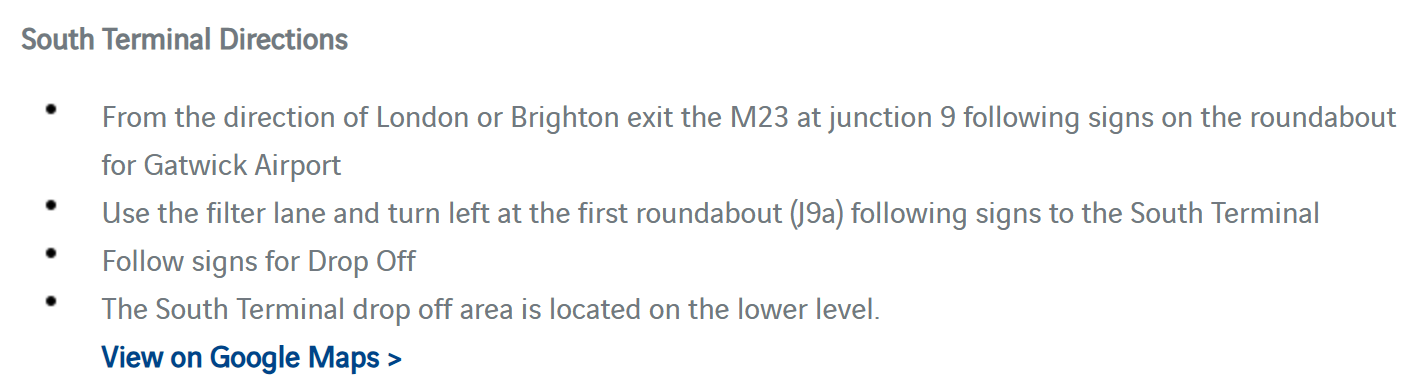
Gatwick’s South Terminal drop-off directions identify the lower-level forecourt and designated vehicle approach.
How Can You Pay the Gatwick Drop Off Charge?
Drivers can pay the Gatwick drop off charge online, by automated telephone or through a registered AutoPay account.
The most important consideration is that payment must match the correct vehicle registration number.
Paying Online
Gatwick provides an authorised online payment service for drivers who have already used a drop-off zone.
To pay:
- Visit the official Gatwick drop-off information and payment page.
- Select the option to pay the drop-off charge online.
- Enter the vehicle registration when requested.
- Follow the payment system’s instructions.
- Check the displayed visit and charge details.
- Complete payment and retain the confirmation.
Gatwick advises drivers making a one-off payment to do so after exiting the drop-off zone, allowing the ANPR system to recognise the completed visit and calculate the charge.
For families sharing vehicles or people using a borrowed car, checking the registration carefully is particularly important.
Entering an incorrect letter or number could result in the payment being associated with the wrong vehicle.
Paying by Telephone
Drivers can also use Gatwick’s automated payment telephone line:
0330 174 4503
Have the vehicle registration and payment card information available before calling.
Telephone payment is useful for motorists who prefer not to complete a web-based transaction.
Paying Through AutoPay
AutoPay is designed for motorists who regularly enter Gatwick’s drop-off zones.
Drivers register their vehicle and payment details in advance. Eligible visits can then be charged automatically to the registered account.
This reduces the need to remember a separate payment following each journey.
However, AutoPay does not remove the standard £10 fee or provide a general discount.
Its principal financial benefit is reducing the risk of missed payments.
Gatwick advises that AutoPay should be established before entering the drop-off zone. If a visit has already happened, the driver should pay separately for that visit and set up AutoPay for future use.
Business operators should regularly check registered vehicles, payment cards and account transactions to ensure that automatic collection remains active.
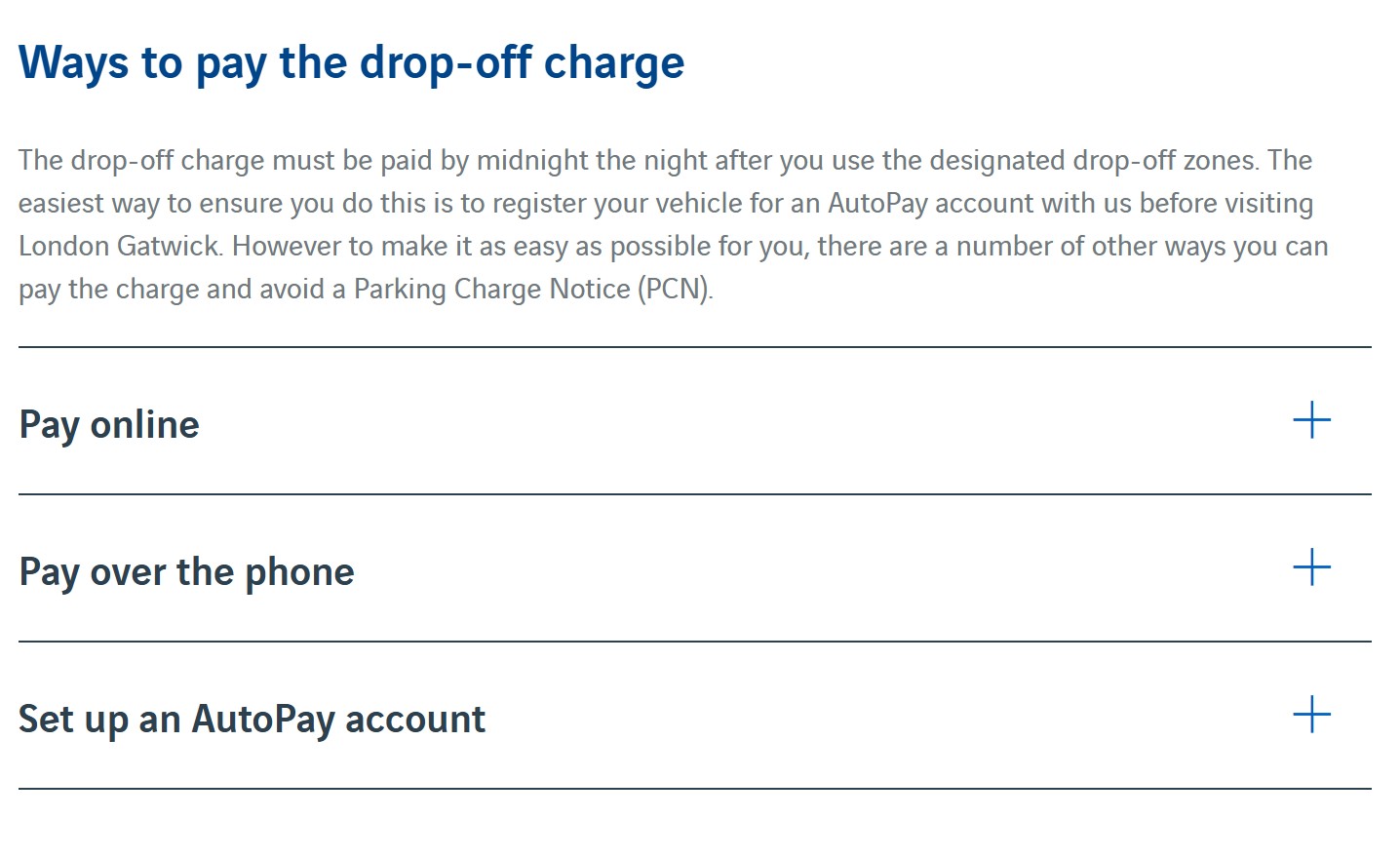
Gatwick’s official payment information explains online payment, telephone payment and AutoPay registration.
When Must the Gatwick Drop Off Charge Be Paid?
The payment deadline is midnight on the calendar day following the vehicle’s visit to the designated drop-off zone.
This is a next-day deadline, rather than a fixed 24-hour period after entering the airport.
For example, a driver who enters the forecourt at 9am on Monday must pay by midnight on Tuesday.
Someone entering at 11pm on Monday has the same Tuesday deadline.
| Day of drop-off | Final payment deadline |
|---|---|
| Monday | Tuesday at midnight |
| Tuesday | Wednesday at midnight |
| Wednesday | Thursday at midnight |
| Thursday | Friday at midnight |
| Friday | Saturday at midnight |
| Saturday | Sunday at midnight |
| Sunday | Monday at midnight |
The same rule applies to weekends and public holidays.
Motorists should not assume that payments can be postponed until the next working day.
Our assessment is that paying immediately after completing the journey is the simplest option for occasional users.
For regular business journeys, a properly maintained AutoPay account may provide more dependable administration.
For example, a driver who makes ten airport visits a month has ten separate opportunities to overlook payment. Automatic collection removes much of that manual workload, although transaction checks remain necessary.
What Happens If You Forget to Pay the Gatwick Drop Off Charge?
Drivers who fail to pay within the published deadline may receive a Parking Charge Notice (PCN).
Gatwick’s published terms specify a £100 Parking Charge, reduced to £60 when paid within 14 days of the notice being issued.
| Circumstance | Amount payable |
|---|---|
| Standard drop-off, first 10 minutes | £10 |
| Parking Charge paid within 14 days | £60 |
| Standard Parking Charge | £100 |
The difference is substantial.
A £60 discounted Parking Charge is six times the initial £10 drop-off fee.
The full £100 charge represents ten times the standard fee.
These amounts demonstrate why payment management is particularly important, even for a very short visit.
What Should You Do After Receiving a Parking Charge Notice?
Drivers receiving a notice should first examine its details.
Check the vehicle registration, visit date, location, alleged contravention and payment information.
Gatwick uses Times24 to administer the relevant drop-off charging and enforcement arrangements.
Drivers who believe a notice was issued incorrectly can use the operator’s official appeal process.
Potential matters worth investigating include a payment that was made but not allocated correctly, an incorrect vehicle registration, or evidence that the vehicle was not involved in the alleged visit.
Supporting documents may include payment receipts, bank transaction records and correspondence.
Appeals should explain the specific reason for disputing the notice and include the available evidence.
A Parking Charge Notice should not simply be ignored. The relevant notice sets out the payment and challenge arrangements that apply.
For payment queries, Gatwick also directs customers to:
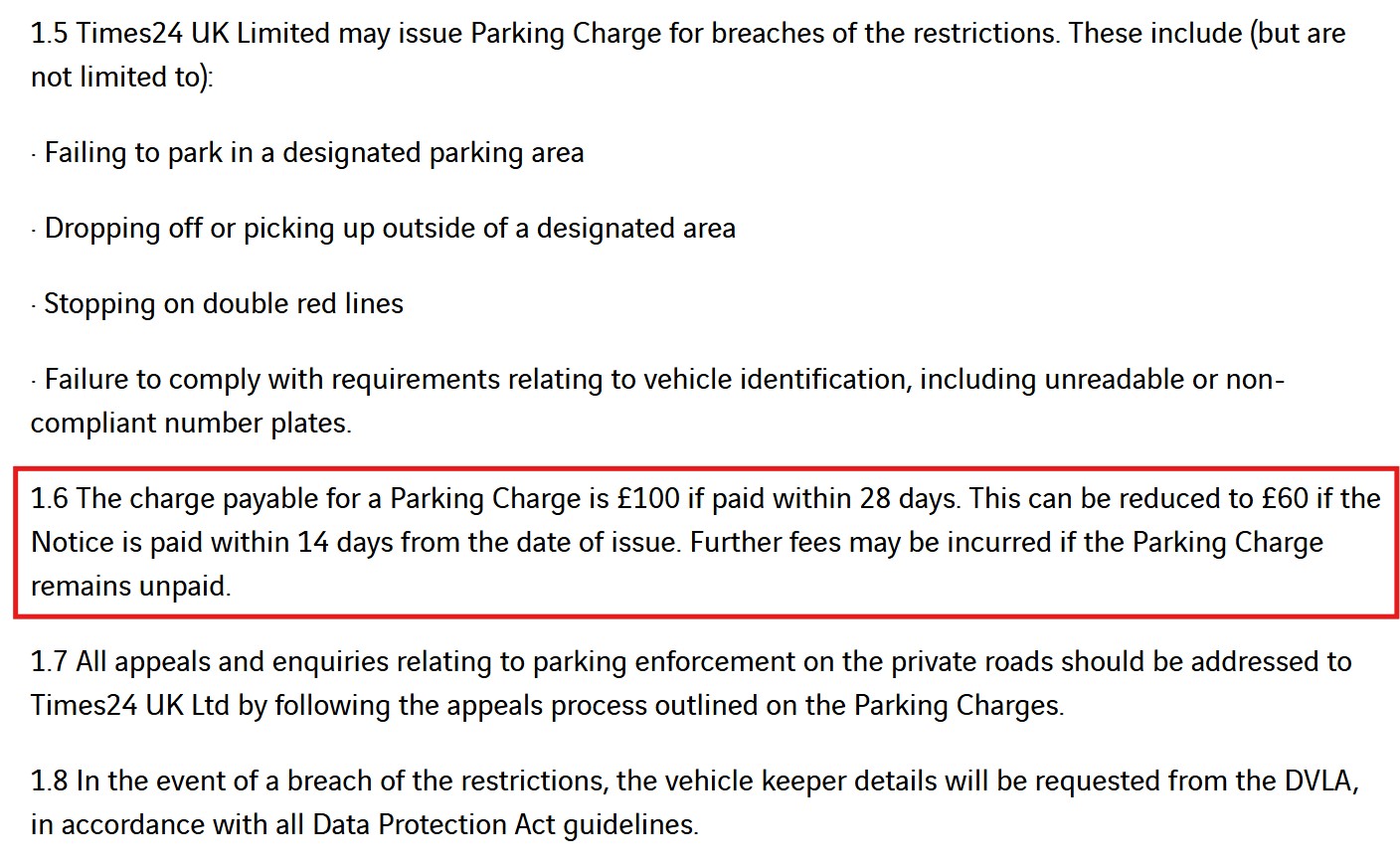
Gatwick’s published enforcement terms explain the £100 Parking Charge and reduction to £60 for payment within 14 days.
Can You Drop Someone Off at Gatwick for Free?
Yes. Gatwick provides up to two hours of free parking in its official Long Stay car parks at both terminals.
Passengers can then use the airport’s free shuttle bus to reach departures.
This is an important distinction because the £10 charge applies to the designated terminal forecourt, not to every location where passengers can leave a vehicle.
To use the free alternative, drivers should follow signs for the appropriate Long Stay car park rather than the terminal drop-off zone.
Once parked, passengers can transfer their luggage to the shuttle bus and continue to the airport terminal.
The free allowance applies to the parking duration of the vehicle, so drivers must leave within the permitted two-hour period to avoid standard parking charges.
How Long Does the Free Shuttle Take?
Gatwick publishes the following approximate Long Stay shuttle arrangements:
| Transfer detail | Published information |
|---|---|
| Shuttle cost | Free |
| Service availability | 24 hours, year-round |
| Usual bus frequency | Every 10–12 minutes |
| South Terminal journey | Approximately 5–10 minutes |
| North Terminal journey | Approximately 10–12 minutes |
| Free car parking allowance | Up to 2 hours |
These are typical timings rather than guarantees. Waiting times can be longer during busy periods.
For passengers travelling with young children, several suitcases or mobility equipment, additional time should be allowed for boarding and unloading.
Using Long Stay instead of the £10 forecourt provides a 100% saving on the standard drop-off fee.
However, the financial saving should be considered alongside transfer time and individual accessibility requirements.
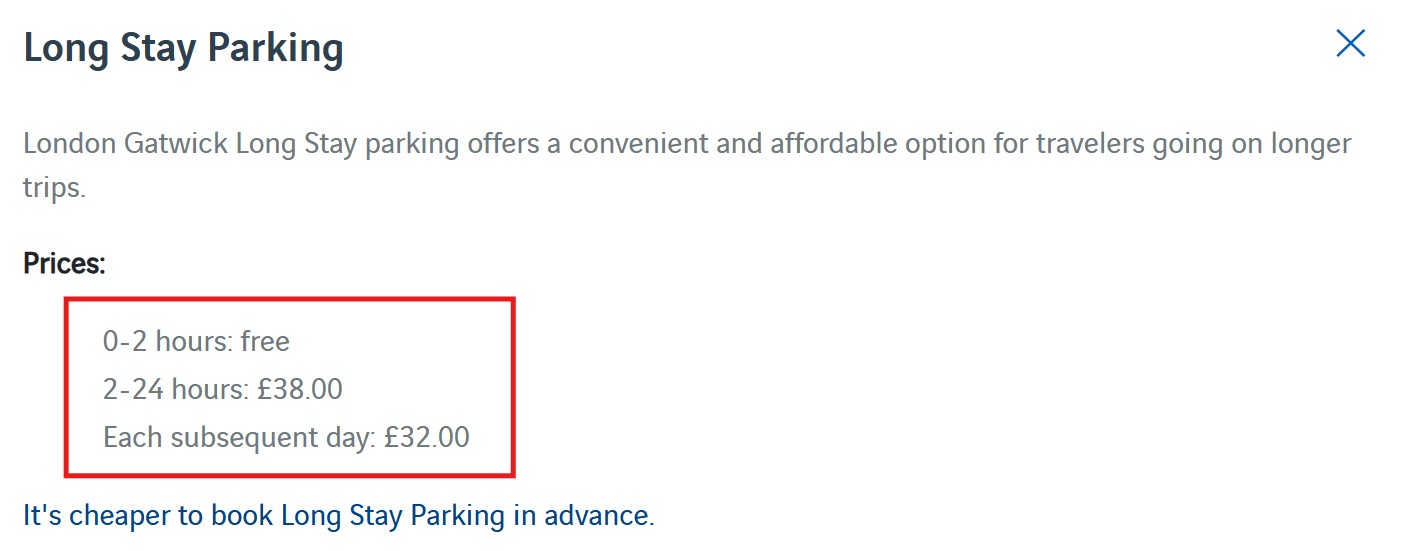
Gatwick’s official Long Stay parking tariff confirms that the first two hours are free.
Is Gatwick Short Stay Parking Cheaper Than the Drop Off Charge?
An important finding in the published tariffs is that Gatwick’s ordinary Short Stay parking can cost less than the terminal drop-off zone.
The airport currently advertises a standard drive-up Short Stay charge of £8 for stays of up to 30 minutes.
That is £2 less than the initial £10 forecourt fee.
It represents a 20% saving, provided the visit fits within the first 30-minute Short Stay parking band.
Short Stay parking is located close to both terminals, with an approximate four-minute covered walk to the terminal.
It may therefore be more suitable for someone who needs to accompany a passenger towards departures, assist with several bags or spend additional time saying goodbye.
| Parking option | Published cost | Practical consideration |
|---|---|---|
| Terminal drop-off, up to 10 minutes | £10 | Direct forecourt access |
| Terminal drop-off, 20 minutes | £20 | Maximum 30-minute stay |
| Ordinary Short Stay, up to 30 minutes | £8 | Parking and short walk |
| Long Stay, up to 2 hours | Free | Shuttle transfer |
| Premium Short Stay, up to 30 minutes | £12 | Premium parking access |
For a 20-minute visit, the standard £8 Short Stay option costs £12 less than remaining in the drop-off zone for the same period.
That represents a 60% saving.
The comparison highlights why the most convenient-looking forecourt option is not always the least expensive.
Drivers should nevertheless check the latest drive-up rates before travelling and use the correct car park entrance.
These figures apply to the published parking products, not to a guaranteed pre-booked promotional rate.
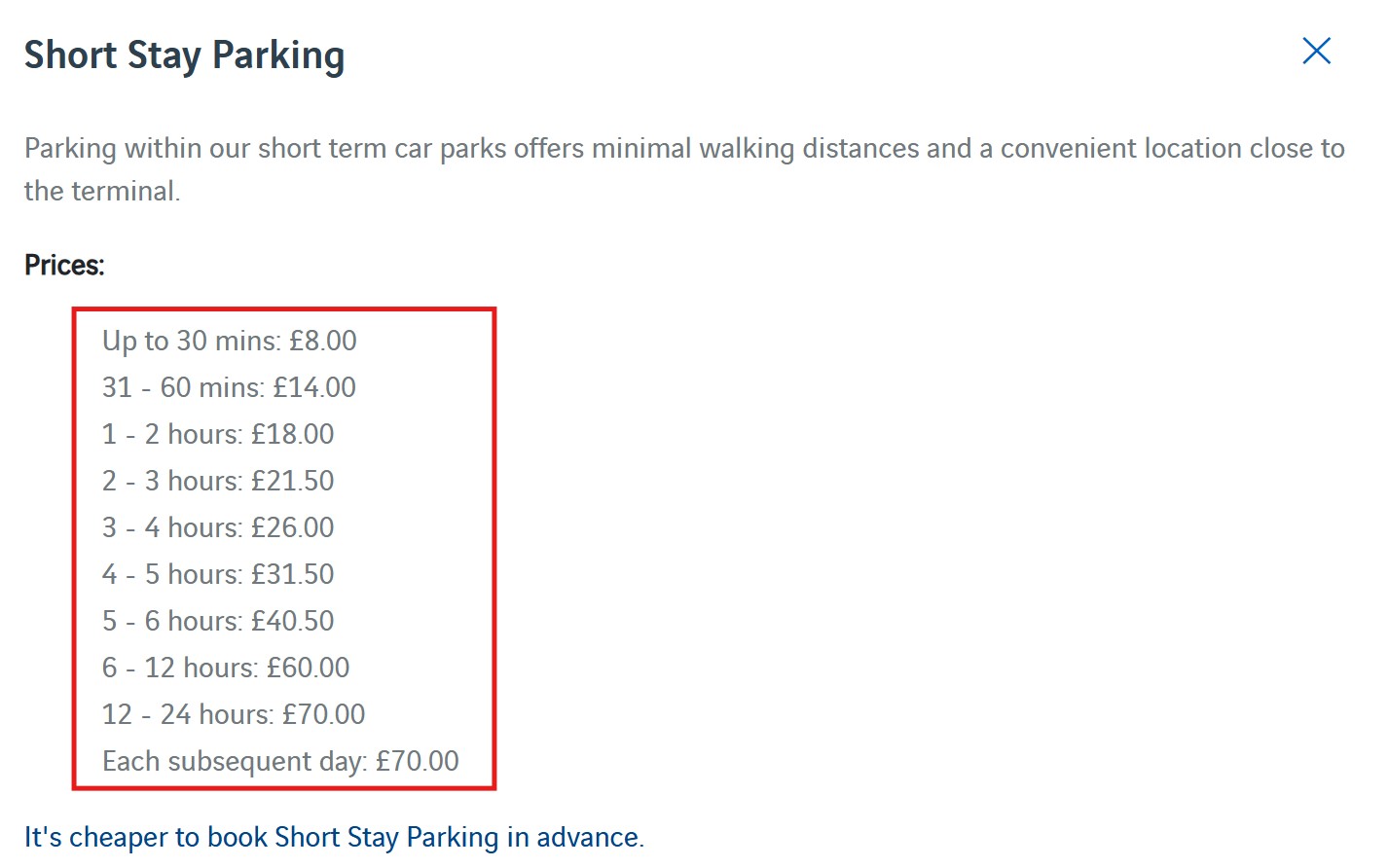
Gatwick’s official parking prices show that ordinary Short Stay costs £8 for up to 30 minutes, compared with the £10 minimum terminal drop-off fee.
Readers comparing longer parking durations, pre-booked options and terminal transfers can also examine how much parking costs at Gatwick.
Can Blue Badge Holders Use Gatwick Drop Off for Free?
Eligible Blue Badge holders can receive a 100% exemption from the Gatwick terminal drop-off charge, provided the vehicle and visit have been registered and approved under the airport’s rules.
The exemption applies to a free drop-off session of up to 30 minutes.
It is not automatically granted simply because a Blue Badge is displayed inside a vehicle.
Gatwick’s current guidance states that applications can be submitted from three months before the relevant flight until the day before travel.
The application requires the relevant vehicle registration details and evidence of Blue Badge eligibility.
A vehicle owner may register on the passenger’s behalf, including where a family member or friend is providing transport.
For taxi journeys, the passenger can obtain the vehicle registration from the taxi operator and register that vehicle in advance.
The airport issues an email confirmation following successful registration.
A particularly important condition concerns vehicles already linked to AutoPay. Gatwick advises that automatic charging should be disabled when using a qualifying Blue Badge exemption to avoid an unnecessary debit.
Applications made on or after the date of travel may not be accepted.
Because exemptions are linked to the approved visit and vehicle details, motorists should not assume that an earlier registration automatically covers every future journey.
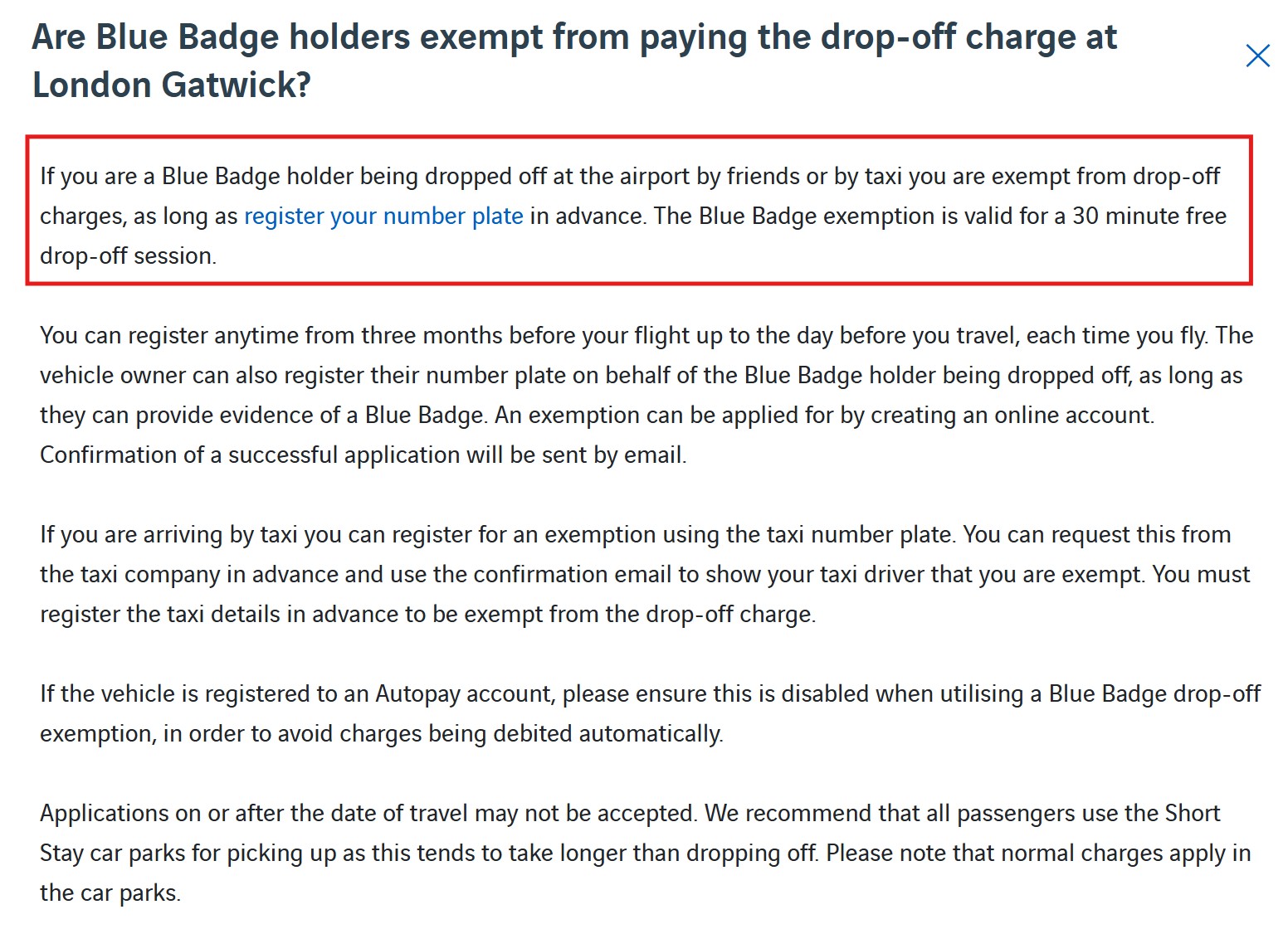
Gatwick’s official accessibility guidance explains the free 30-minute Blue Badge drop-off exemption and advance registration requirements.
Do Taxis, Uber and Private Hire Vehicles Pay the Gatwick Drop Off Charge?
Taxis and private hire vehicles are generally subject to Gatwick’s standard terminal drop-off charges unless a specific approved exemption applies.
The fact that a vehicle is commercially licensed does not create an automatic exemption.
For passengers, the more important question is whether the airport charge is already included in the quoted fare.
A private hire company may incorporate the £10 charge within a fixed airport transfer price, while another operator may display it as a separate item.
This distinction matters when comparing travel quotations.
Consider two hypothetical bookings:
| Transfer quotation | Fare | Airport fee | Total |
|---|---|---|---|
| Operator A | £55 | Included | £55 |
| Operator B | £49 | £10 extra | £59 |
Although Operator B initially appears cheaper, its final price is £4 higher.
For business travellers, requesting an all-inclusive price can simplify expenses and prevent unexpected additions.
Passengers qualifying for a Blue Badge exemption should arrange the vehicle registration with the taxi operator ahead of travel.
Can Taxi Drivers Recover the Charge as a Business Expense?
Where an airport drop-off fee arises wholly and exclusively from a qualifying business journey, it may be treated as a business-related transport cost, subject to the applicable tax and accounting rules.
However, recording the expenditure and claiming tax relief are separate matters.
Businesses should maintain accurate receipts, match charges to journeys and check VAT documentation before treating any amount as recoverable input tax.
The published forecourt tariff includes VAT, but that does not automatically establish that every driver or business can reclaim it.
A proper expense record is particularly important for businesses managing several drivers or vehicles.
How Much Do Gatwick Drop Off Charges Cost Regular Travellers and Businesses?
A single £10 charge may appear manageable, but repeated airport journeys can turn it into a substantial annual expense.
Our cost modelling illustrates the effect of recurring visits at the published minimum tariff.
| Charged drop-offs per month | Monthly cost | Annual cost |
|---|---|---|
| 4 | £40 | £480 |
| 8 | £80 | £960 |
| 12 | £120 | £1,440 |
| 20 | £200 | £2,400 |
| 40 | £400 | £4,800 |
These are illustrative calculations assuming each visit incurs the standard £10 minimum charge, with no exemptions, longer stays or future tariff changes.
A transfer business completing 20 such journeys each month would spend £2,400 per year on Gatwick’s drop-off charges alone.
At the previous £7 tariff, the same number of visits would have cost £1,680 annually.
The January 2026 price increase therefore adds £720 per year in this example.
For operators working with narrow profit margins, understanding the full cost of an airport journey is essential.
Regular airport transport costs can include driver wages, fuel, vehicle wear, parking, insurance and administrative time.
Our financial assessment suggests that businesses should distinguish between unavoidable customer-service costs and avoidable administrative penalties.
Registering regularly used vehicles for AutoPay, reconciling transactions and clearly explaining airport surcharges to customers can make charges more predictable.
The same principle applies to households regularly dropping off relatives or friends.
Where the free Long Stay arrangement is practical, avoiding even eight £10 drop-offs annually represents a potential £80 saving.
Can Local Commuters Get Reduced Gatwick Drop Off Charges?
Gatwick’s published terms also describe a Local Commuter Scheme.
The scheme is separate from the normal passenger drop-off charging arrangements and is associated with access to the South Terminal forecourt.
It is intended for qualifying local users, including eligible residents making regular journeys connected with the airport and railway station.
The published scheme conditions provide for up to two permitted South Terminal visits per day, subject to the registration rules.
Older terms refer to an annual fee of £50, but that price is explicitly dated to 2021 and should not be treated as a guaranteed current tariff.
Eligibility, postcode restrictions, membership availability and current pricing should be confirmed with Gatwick before applying.
Importantly, the scheme should not be confused with ordinary commuter parking products or treated as a general discount available to every airport passenger.
Can You Pick Someone Up From Gatwick’s Drop Off Zone?
Passengers arriving at Gatwick should use the airport’s designated collection arrangements rather than assuming the departures drop-off forecourt is suitable for waiting.
Gatwick recommends its Short Stay car parks for collecting passengers because arrivals can be unpredictable.
Drivers have two main options:
Short Stay or Express Pick-Up: Gatwick provides express collection bays within its Short Stay car parks.
- North Terminal: Car Park 6, Level 4.
- South Terminal: Car Park 3, Ground Floor.
The ordinary Short Stay tariff applies, and drivers using an express bay must remain with their vehicle.
Long Stay: Drivers can use the free two-hour Long Stay allowance, with passengers travelling between the terminal and car park by shuttle bus.
For delayed flights, Long Stay may provide greater financial flexibility than attempting to coordinate a very short collection.
The important distinction is that the £10 terminal drop-off fee and Short Stay pick-up parking charges are different products.
A payment made for the drop-off forecourt does not automatically pay for parking in a separate Short Stay car park.
How Does the Gatwick Drop Off Charge Compare With Heathrow?
Gatwick and Heathrow both operate chargeable terminal drop-off facilities, but their tariffs and time limits differ.
In October 2026, Gatwick’s minimum terminal drop-off fee is £10, while Heathrow charges £7 per vehicle entry.
Gatwick’s minimum charge is therefore approximately 42.9% higher than Heathrow’s £7 fee.
However, Gatwick permits up to 30 minutes in its drop-off area subject to additional per-minute charges, whereas Heathrow’s charging and stopping restrictions follow a different structure.
Both airports also offer designated free alternatives away from the immediate terminal forecourt.
A meaningful comparison should consider the amount payable, permitted waiting time, transport arrangements and accessibility needs rather than comparing the initial charge alone.
Drivers travelling between different London airports can explore the Heathrow drop-off charge and payment rules or compare airport parking costs and terminal transfers across London.
Could the Gatwick Drop Off Charge Be Reduced in the Future?
Airport drop-off charges have attracted increasing attention from UK policymakers because of rising costs and their effects on passengers.
In October 2026, the Government confirmed its commitment to reviewing airport drop-off charges across the UK.
The proposed review could examine affordability, access for disabled passengers, travel behaviour and the experiences of different airport users.
A possible £5 cap was also discussed during parliamentary scrutiny of the Civil Aviation legislation.
However, a proposed cap is not the same as an approved reduction.
As of 24 October 2026, Gatwick’s published minimum terminal drop-off charge remains £10.
Motorists should therefore continue paying the applicable tariff rather than assuming that proposed government action has already changed the rules.
Future reviews may influence airport charging policy, but any actual tariff adjustment would need to be confirmed through official announcements.
What Are the Most Common Gatwick Drop Off Mistakes?
Several avoidable mistakes can increase the cost of travelling to Gatwick.
| Common mistake | Possible consequence | What to do instead |
|---|---|---|
| Assuming the first few minutes are free | Unexpected £10 charge | Use Long Stay for an eligible free drop-off |
| Forgetting the payment deadline | £100 Parking Charge | Pay promptly after leaving |
| Entering an incorrect registration | Payment mismatch | Check the number plate carefully |
| Activating AutoPay after the visit | Previous visit may remain unpaid | Pay the completed visit separately |
| Spending too long in the forecourt | Extra £1-per-minute charges | Use Short Stay when appropriate |
| Using the wrong terminal | Unnecessary travel or charges | Confirm terminal before arrival |
| Assuming Blue Badge exemption is automatic | Unnecessary charge or notice | Register and obtain confirmation beforehand |
| Stopping on a red route | Separate enforcement risk | Use an authorised stopping or parking location |
| Choosing a taxi based only on base fare | Additional airport fee | Compare the final inclusive price |
| Using Long Stay without allowing transfer time | Risk of delay | Allow time for shuttle waiting and travel |
The most effective way to control these costs is to select the correct airport facility before setting off.
Passengers who prioritise direct terminal access may reasonably decide that the £10 fee is worthwhile.
Others may benefit more from the free Long Stay service or ordinary Short Stay parking.
The right decision depends on the practical requirements of the journey rather than the headline price alone.
Final Thoughts
The Gatwick drop off charge is now a significant consideration when planning airport transport, particularly following the 42.9% increase introduced in January 2026.
The published minimum charge is £10 for a visit lasting up to 10 minutes, while a full 30-minute stay can cost £30. Drivers who fail to complete payment by midnight the following day risk a £100 Parking Charge.
However, the headline tariff does not tell the complete financial story.
Gatwick’s two-hour free Long Stay parking arrangement offers a practical alternative for passengers who can accommodate the shuttle transfer. Ordinary Short Stay parking can also be more economical for visitors who require extra time near the terminal.
For families, the most suitable option depends on luggage, accessibility and available transfer time. For businesses, the priority is accurate cost planning, clear fare structures and dependable payment administration.
Our analysis indicates that the simplest way to avoid unnecessary airport expenditure is to understand the difference between terminal drop-off, Short Stay parking and Long Stay parking before arriving.
Choosing the correct facility, registering exemptions in advance and meeting payment deadlines can prevent a routine airport journey from becoming an unexpectedly expensive one.
Frequently Asked Questions About Gatwick Drop Off Charges
Is Gatwick drop off free for 10 minutes?
No. Gatwick charges £10 for the first 10 minutes in the designated North and South Terminal drop-off zones. The first 10 minutes are not free.
How do I pay the Gatwick drop off charge after leaving?
Use Gatwick’s official online payment service or automated telephone line. Payment must be completed by midnight the following day.
Can I pay the Gatwick drop off charge in advance?
Drivers can set up AutoPay before visiting the airport so that qualifying charges are collected automatically. One-off online payments should be made after leaving the drop-off zone.
What happens if I stay longer than 10 minutes?
An additional £1 is charged for each extra minute, up to the published maximum £30 charge and maximum permitted 30-minute stay.
Is the Gatwick drop off charge the same at both terminals?
Yes. North Terminal and South Terminal have the same £10 minimum drop-off tariff and additional per-minute pricing.
Where can I drop someone off at Gatwick without paying?
Use the official Long Stay car park at the relevant terminal. Parking is free for up to two hours, with a complimentary shuttle to the terminal.
How much is the fine for not paying Gatwick drop off?
The published Parking Charge is £100, reduced to £60 when paid within 14 days of issue.
Do electric vehicles have to pay the Gatwick drop off charge?
Yes. Electric or low-emission vehicle status does not automatically provide a general exemption from the terminal drop-off tariff.
Can I drop someone off at Gatwick at night?
Yes. The drop-off zones operate throughout the day and night. The standard charges and next-day payment deadline continue to apply.
Is Short Stay parking cheaper than Gatwick drop off?
It can be. Gatwick’s published ordinary Short Stay drive-up tariff is £8 for up to 30 minutes, compared with £10 for the first 10 minutes in the terminal drop-off area.
Hannah is a London lifestyle and consumer writer at London Insider News, covering property, transport, local developments, cost-of-living issues and stories affecting everyday life across the capital.
More from TRANSPORT
Check Congestion Charge 2027: How to Check by Number Plate, Postcode and Payment Status?
Before driving into central London, checking the Congestion Charge can prevent an £18 daily expense from…
Pay Stansted Drop Off Charge: How to Pay Online, Current Fees, Deadlines and Free Alternatives?
Drivers using London Stansted Airport's Express Set Down area must pay a drop-off charge after their…
Do I Need to Pay Congestion Charge in London? 2027 Rules, 2026 Updates, Costs and Exemptions
If you're planning to drive through central London, you may be wondering, do I need to…