UK Highway Code Driveway Parking Rules 2027: Fines, Dropped Kerbs and New 2026 Changes
Explore the UK Highway Code driveway parking rules for 2027, including dropped kerbs, parking fines, blocked driveways and new pavement enforcement changes.
 Hannah
London Lifestyle & Consumer Writer
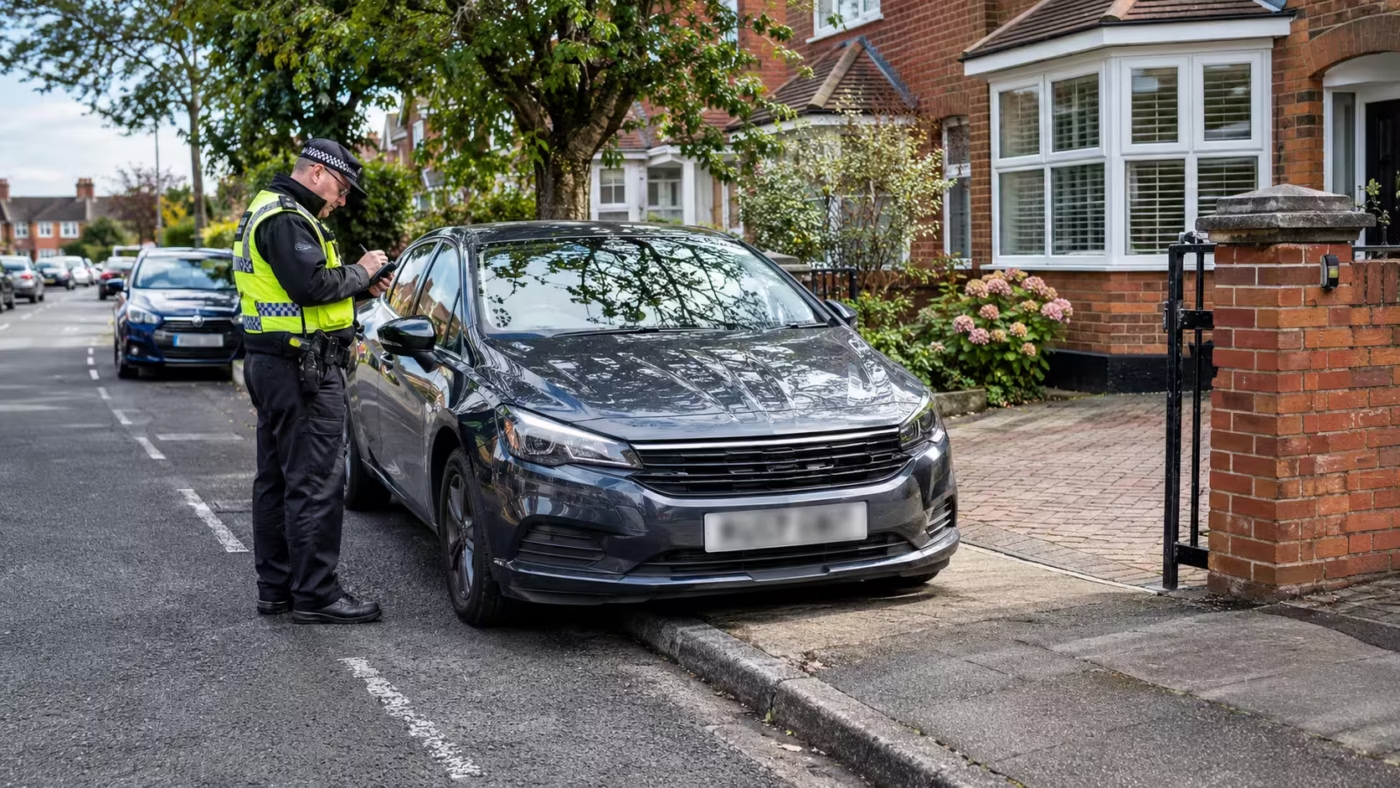
The UK Highway Code driveway parking rules are becoming increasingly important for homeowners, motorists, landlords and businesses preparing for 2027. Parking across a driveway, blocking a dropped kerb or leaving a vehicle partly on the pavement can lead to enforcement action, even when there are no yellow lines.
However, parking outside someone’s house is not automatically illegal, and homeowners do not have an exclusive right to the public road outside their property.
Our analysis of the Highway Code, local authority enforcement policies, parliamentary announcements and published motoring industry commentary shows that the legal position depends on where the vehicle is parked, whether access is obstructed and which part of the UK the property is located in.
An important development came in October 2026 when the Government outlined plans for additional pavement-parking enforcement powers in England during 2027. Separate reforms to private parking charges were also announced.
For homeowners and businesses, these changes make understanding driveway access, enforcement procedures and financial liabilities particularly important.
What Are the UK Highway Code Driveway Parking Rules for 2027?
The Highway Code establishes rules and guidance intended to prevent dangerous, obstructive and inconsiderate parking.
Rules 239, 242, 243 and 244 are particularly relevant to vehicles parked outside residential properties, businesses and driveways.
| Highway Code rule | Main requirement | Relevance to driveway parking |
| Rule 239 | Use suitable parking spaces and park safely | Drivers should choose appropriate parking locations |
| Rule 242 | Vehicles must not be left in a dangerous position or cause unnecessary road obstruction | Applies where roadside parking creates an obstruction |
| Rule 243 | Drivers should not park in front of property entrances or at certain other hazardous locations | Directly relevant to blocked driveways |
| Rule 244 | Pavement parking is prohibited in London and Scotland, subject to limited exceptions | Important where vehicles overlap the pavement |
| Rule 201 | Reverse into driveways and drive out where possible | Helps reduce risks when entering and leaving a property |
The distinction between MUST NOT and DO NOT matters.
Rules using MUST NOT describe legal requirements supported by legislation. Other rules provide important guidance and may still be relevant when determining whether driving or parking was dangerous, careless or obstructive.
For example, Rule 243 advises drivers against parking in front of a property entrance. Whether enforcement action can be taken depends on the underlying legislation and circumstances.
Motorists should therefore avoid assuming that a parking space is lawful simply because no yellow lines or restriction signs are visible.
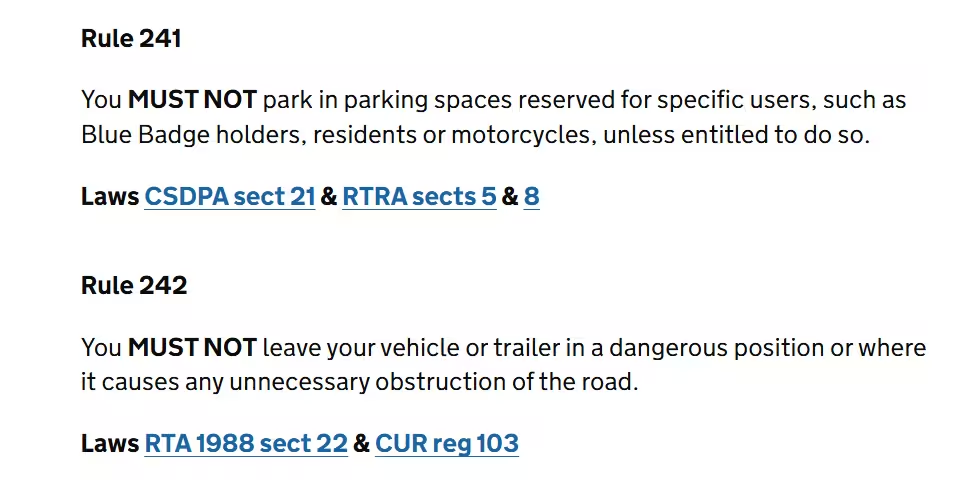
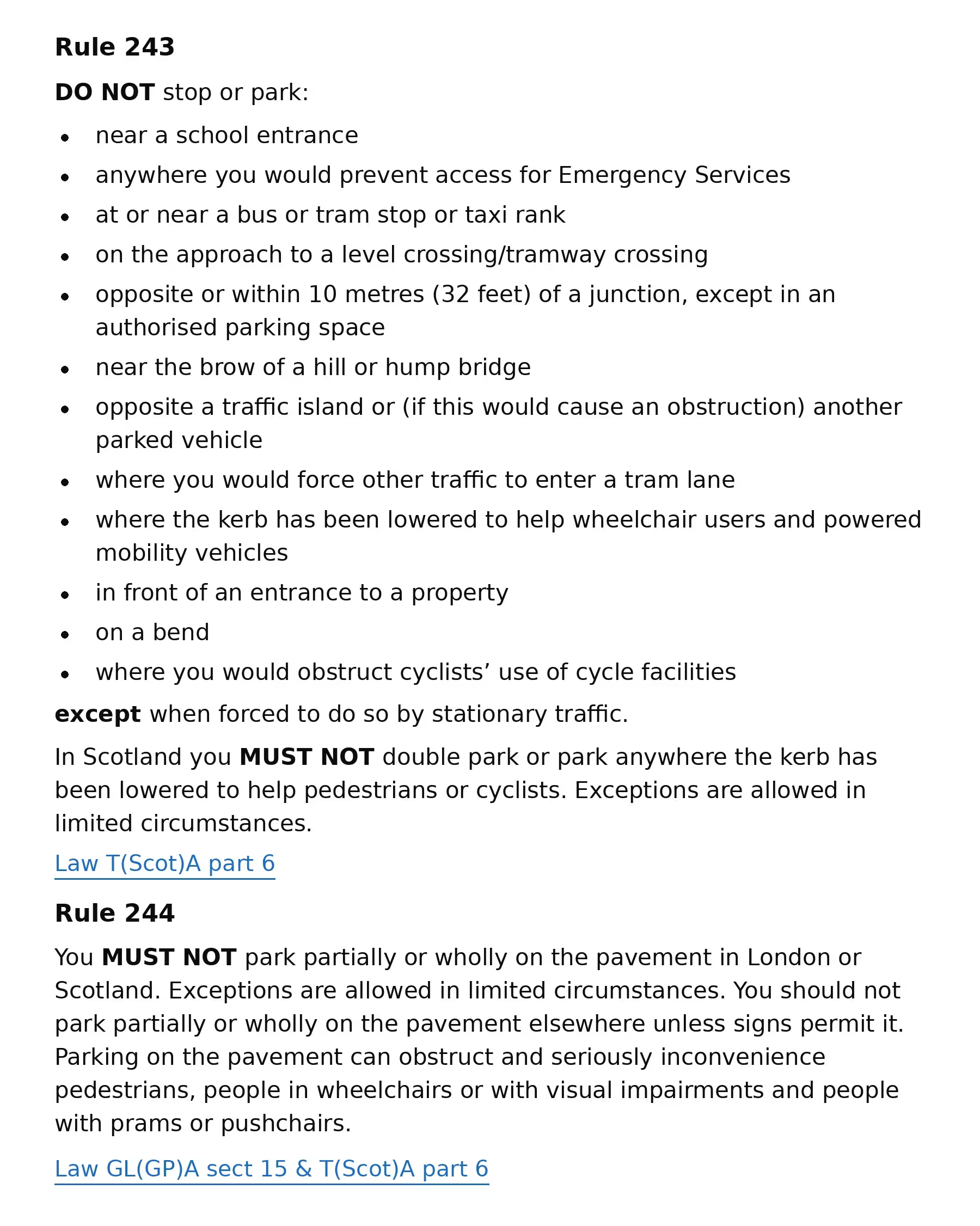
Official Highway Code Rules 242, 243 and 244 explaining obstruction, property entrances and pavement parking.
Is It Illegal to Park Across Someone’s Driveway in the UK?
Parking across a driveway can be unlawful, but enforcement depends on the circumstances.
A crucial distinction exists between parking on the public highway and parking on private property.
Parking Across a Dropped Kerb
A dropped kerb is a section of pavement or roadside kerb lowered to provide vehicle access to a driveway, garage or private parking area.
In England and Wales, Section 86 of the Traffic Management Act 2004 provides for civil enforcement of parking alongside certain dropped footways in designated special enforcement areas.
This provision can apply where a dropped footway enables vehicles to enter or leave property.
Consequently, a driver may receive a council Penalty Charge Notice even where there are no yellow lines directly outside the driveway.
Some councils require the affected householder to report the obstruction before a civil enforcement officer attends. Others maintain more proactive enforcement arrangements.
Exceptions can apply, including qualifying homeowner consent and certain loading activities.
Parking Where There Is No Dropped Kerb
The situation becomes more complicated when someone has created a parking area in their front garden without obtaining a lawful vehicle crossing.
Homeownership does not automatically provide permission to drive across a public footway.
In many circumstances, a properly authorised dropped kerb is required before vehicles can legally cross the pavement to access a property.
Where no authorised vehicle access exists, the homeowner cannot assume that the roadside space must remain clear for their vehicle.
However, existing yellow lines, parking controls and general road-obstruction laws may still apply.
Our assessment is that verifying the legal status of the driveway access should be one of the first steps in any parking dispute.
Can You Park Outside Your Own Driveway in 2027?
Homeowners can sometimes park across their own driveway entrance, but this is not an unrestricted right.
In England and Wales, an exception can apply where a vehicle is parked outside residential premises with the occupier’s consent, provided the relevant statutory conditions are satisfied.
There are several important limitations:
- Permission does not override existing yellow lines or other applicable restrictions.
- A shared driveway cannot generally be treated like a private entrance serving one home.
- Consent does not automatically authorise obstructive or dangerous parking.
- The residential consent exception does not permit a person to sell parking rights over the public highway.
- Pavement-parking restrictions remain applicable.
For example, someone living in a house with a single private driveway may be able to allow a visiting family member to park across the entrance.
The position could be different where the same entrance serves two houses or several flats.
Some councils also operate local enforcement registration systems, which can affect how homeowner consent is checked.
The safest approach is to confirm the council’s policy rather than assuming that ownership of the adjacent property makes the roadside space private.
What Are the New Driveway and Pavement Parking Changes for 2027?
The most significant forward-looking development concerns pavement parking in England.
On 8 January 2026, the Government published its response to the consultation on managing pavement parking.
Rather than immediately extending London’s comprehensive pavement-parking restrictions across England, ministers proposed giving local authorities additional enforcement and regulatory powers.
Further details emerged through parliamentary answers in October 2026.
January 2027 Enforcement Plans
On 22 October 2026, Transport Minister Justin Madders confirmed that the Department for Transport intended to introduce secondary legislation in January 2027.
The proposed first stage would enable local authorities with civil parking enforcement powers to issue penalty charge notices when a vehicle unnecessarily obstructs the pavement.
This is particularly relevant to residential streets where drivers park partly on the pavement to leave additional room for passing traffic.
The second stage would allow local transport authorities to introduce wider pavement-parking prohibitions within their areas, subject to appropriate exemptions.
In a separate answer on 19 October 2026, the Government indicated that the regulations enabling those wider local prohibitions were not expected before late 2027.
These statements describe planned measures, not changes already in force in November 2026.
| Development | Date | Position |
| Government response to pavement-parking consultation | 8 January 2026 | Published |
| New local prohibition powers established through 2026 legislation | 2026 | Legislative framework introduced |
| Parliamentary clarification on the wider prohibition timetable | 19 October 2026 | Regulations planned no earlier than late 2027 |
| Announcement of initial obstruction-enforcement timetable | 22 October 2026 | January 2027 introduction intended |
| Wider local pavement-parking restrictions | Late 2027 or later | Subject to regulations and local decisions |
This means drivers should not assume that every English council will automatically introduce an identical pavement-parking ban on 1 January 2027.
The proposed powers are separate from existing rules governing dropped kerbs and property entrances.
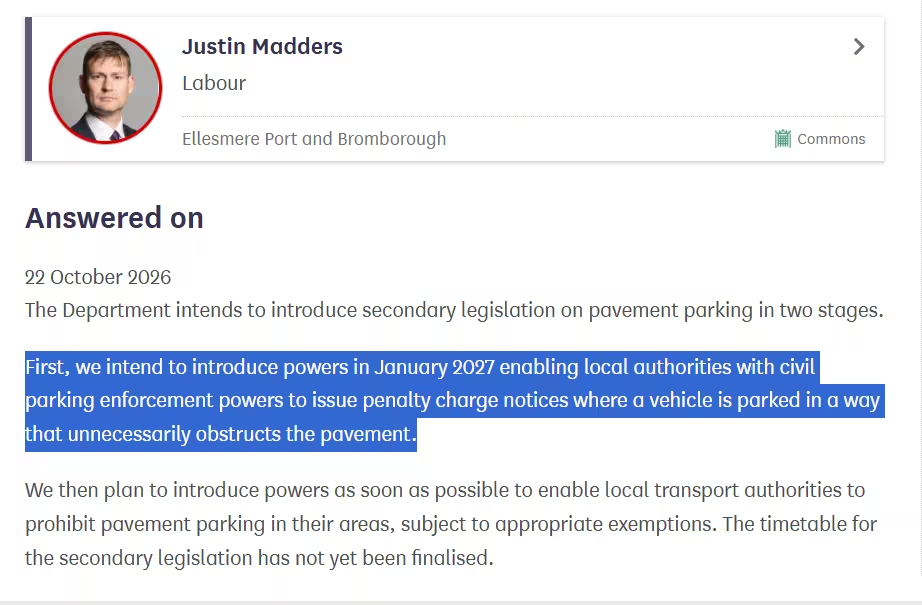
October 2026 parliamentary confirmation of planned pavement-obstruction penalties and wider local parking powers for 2027.
Are Driveway Parking Rules Different in England, Scotland, Wales and Northern Ireland?
Yes. Parking legislation and enforcement arrangements differ across the UK.
Although many road-safety principles are similar, motorists should not treat the four nations as having identical pavement-parking restrictions.
| UK nation | Pavement parking position in November 2026 | Driveway access considerations |
| England – London | General pavement-parking prohibition with limited exceptions | Councils can enforce qualifying dropped-kerb contraventions |
| England – outside London | No equivalent blanket nationwide prohibition yet; other restrictions and obstruction laws apply | Dropped-kerb enforcement depends on applicable legislation and local arrangements |
| Scotland | National pavement-parking and double-parking prohibitions apply, subject to exemptions | The national dropped-kerb prohibition targets qualifying pedestrian and cycle crossing locations; driveway issues may involve other laws |
| Wales | No equivalent blanket pavement-parking ban across Wales | Dropped-kerb parking and obstruction can attract enforcement |
| Northern Ireland | Restrictions apply in designated situations; wider changes have been proposed | Separate Northern Ireland legislation governs access obstruction and parking |
Scotland’s Existing Parking Restrictions
Scotland introduced a national framework prohibiting pavement parking, double parking and parking at qualifying dropped-kerb crossing locations.
Enforcement powers became available to councils from 11 December 2023.
The standard penalty is £100, reduced to £50 when paid within 14 days.
This represents a 50% reduction for eligible early payment.
Importantly, the national dropped-kerb prohibition should not be confused with an automatic ban on every vehicle parked outside a domestic driveway.
For instance, North Lanarkshire Council explains that the national dropped-kerb rules do not themselves cover driveway entrances, although existing restrictions and obstruction laws can still apply.
What About Wales and Northern Ireland?
Wales continues to operate its existing parking enforcement arrangements while broader pavement-parking reform remains a separate policy matter.
Northern Ireland has its own official Highway Code and parking legislation. Restrictions introduced in 2023 apply to pavement parking at particular locations, while proposals for additional restrictions were announced in November 2025.
Drivers travelling between different UK regions should check the relevant local rules.
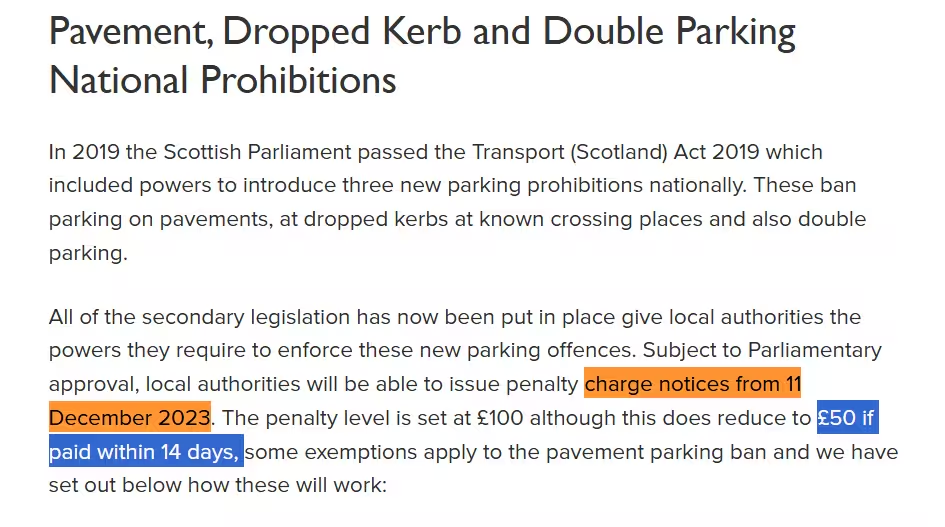
Scottish Government information confirming the national pavement-parking prohibitions and the £100 penalty.
How Much Is the Fine for Blocking a Driveway in 2027?
There is no single UK-wide fine that applies to every case of driveway obstruction.
The financial consequences depend on the jurisdiction, the contravention, the issuing authority and the enforcement procedure.
Some incidents result in a civil parking penalty, while more serious obstruction or dangerous parking may involve police action.
| Situation | Potential financial consequence |
| Qualifying dropped-kerb contravention in an English council area | Council PCN at the applicable local rate |
| Example council PCN of £70 | £35 if eligible for a 50% early-payment discount |
| Scottish pavement-parking contravention | £100, normally £50 within 14 days |
| Police-enforced obstruction | Penalty or court consequences depend on the offence |
| Parking on privately managed land | Contractual parking charge, where legally justified |
| Unpaid council PCN progressing to charge certificate | Original penalty generally increases by 50% |
The distinction between a council Penalty Charge Notice and a private Parking Charge Notice is particularly important.
A council PCN arises from statutory parking enforcement.
A private parking charge normally arises from the contractual terms governing a private parking facility.
Motorists who believe a fine is incorrect should examine the evidence, restrictions and notice deadlines before deciding whether to pay or challenge it.
Our assessment of how to appeal a parking ticket also highlights why identifying the issuing authority matters before starting an appeal.
What Happens If You Ignore a Parking Fine?
Ignoring a council PCN can increase the amount owed.
For example, a £70 penalty that progresses to the charge-certificate stage can increase to £105.
That is an additional £35, or 50% above the original penalty.
Further recovery action and costs may follow.
A private parking charge follows a different enforcement route and may ultimately become the subject of civil proceedings.
Neither type of parking notice should be treated as automatically invalid.
What Should You Do If Someone Blocks Your Driveway?
When an unfamiliar vehicle blocks access to a residential or commercial driveway, the appropriate response depends on whether the vehicle is on the public highway or private land.
Our recommended approach is to establish the location and nature of the obstruction before contacting the relevant authority.
Step 1: Record the Vehicle and Location
Photograph the vehicle’s position, registration number and the driveway entrance.
Where possible, include the dropped kerb, relevant road markings and nearby signs.
Record the date and time of the incident.
This can help distinguish a vehicle actually obstructing an entrance from one parked inconveniently nearby.
Step 2: Contact the Local Council
Where the vehicle is parked alongside an enforceable dropped kerb, the council’s parking enforcement department is often the appropriate first contact.
Explain whether the vehicle prevents entry, exit or both.
Some councils only investigate domestic dropped-kerb obstruction following a complaint by the affected resident.
Step 3: Contact the Police Where Appropriate
If the vehicle creates an obstruction that the council cannot resolve, the police may have powers to intervene.
For non-emergency incidents, use 101 or the police force’s designated online reporting service.
Emergency services should be contacted through 999 only when there is a genuine emergency.
Step 4: Avoid Taking Enforcement Into Your Own Hands
Do not damage, clamp or attempt to move another person’s vehicle without lawful authority.
Private wheel-clamping or towing can itself be unlawful.
Instead, document the situation and use the appropriate legal process.
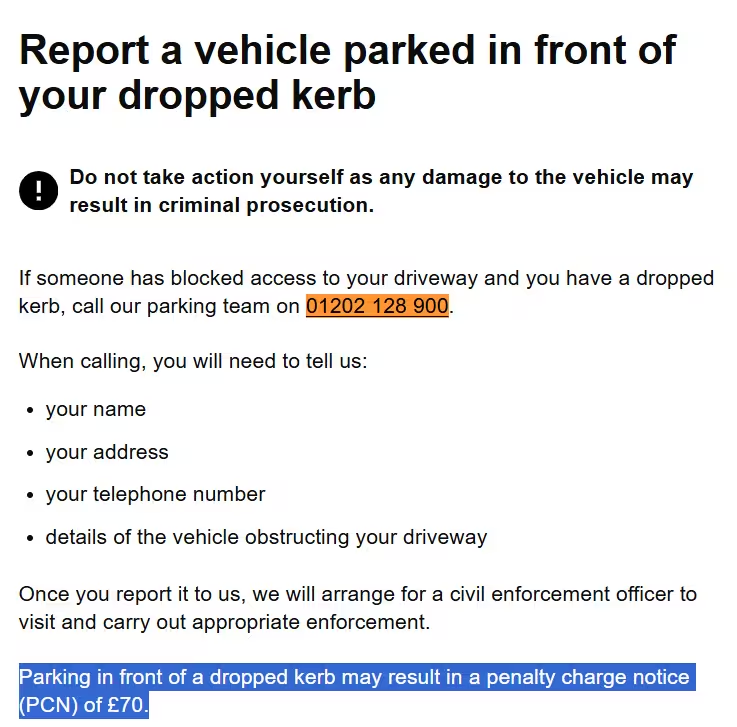
Council procedure for reporting a vehicle obstructing an authorised dropped-kerb driveway.Can Someone Park Opposite Your Driveway?
Parking opposite a driveway is not automatically prohibited.
On narrow residential roads, motorists sometimes struggle to enter or leave a driveway because another vehicle has been parked directly opposite.
However, difficulty manoeuvring does not always establish a parking contravention.
Whether enforcement is possible may depend on road width, existing restrictions, proximity to junctions and whether an unnecessary obstruction has actually been created.
Rule 243 advises against parking opposite another parked vehicle where doing so would cause an obstruction.
It also advises against parking opposite or within 10 metres of a junction, except in an authorised parking space.
For homeowners regularly experiencing difficulty, practical options may include contacting the highway authority about parking restrictions, requesting an assessment of the road layout or discussing recurring problems with neighbours.
The council is not obliged to prohibit otherwise lawful parking simply because a larger vehicle needs more manoeuvring space.
Do White Lines Outside Driveways Stop People Parking There?
White access-protection markings are sometimes painted along the road outside a driveway.
These markings are commonly called H-bars or dog-bone markings.
Their purpose is to make the entrance more visible and discourage drivers from parking across it.
However, an H-bar does not usually create an independent parking prohibition.
The underlying dropped-kerb rules, obstruction laws and any existing traffic restrictions remain important.
Some councils charge for installing access-protection markings.
For example, Ashford Borough Council publishes an installation and administration charge of £180 for qualifying markings.
That figure is a local example, not a standard national fee.
Homeowners should also understand that an H-bar does not turn the public highway into private parking space.
What Are the New Private Parking Rules Introduced in 2026?
A separate reform announced in October 2026 concerns privately managed parking facilities.
On 20 October 2026, the Government laid a new Private Parking Code of Practice before Parliament.
The code establishes proposed national minimum standards for private parking operators in England, Scotland and Wales.
The planned protections include:
- A minimum five-minute consideration period for motorists to decide whether to park.
- A minimum ten-minute grace period to leave after an eligible parking session ends.
- A maximum standard parking charge of £100.
- A minimum 40% early-payment discount on qualifying parking charges.
- Stronger appeals protections for circumstances outside a driver’s control.
- A maximum £20 charge on appeal for certain qualifying minor errors.
The new code was still undergoing parliamentary scrutiny in early November 2026.
The Government indicated that, subject to the parliamentary process, the code was expected to be issued on 30 November 2026 and would come into force 21 calendar days after issue.
Consequently, the proposed protections should not be described as already operational in November 2026.
The reforms primarily concern private parking operators, rather than council-issued penalties for blocking public-highway driveway access.
They may nevertheless matter to businesses operating customer car parks, residential property managers and homeowners commercially letting private parking spaces.
For comparison, our examination of airport parking shows how privately operated facilities can have contractual terms that differ from ordinary residential roadside parking.
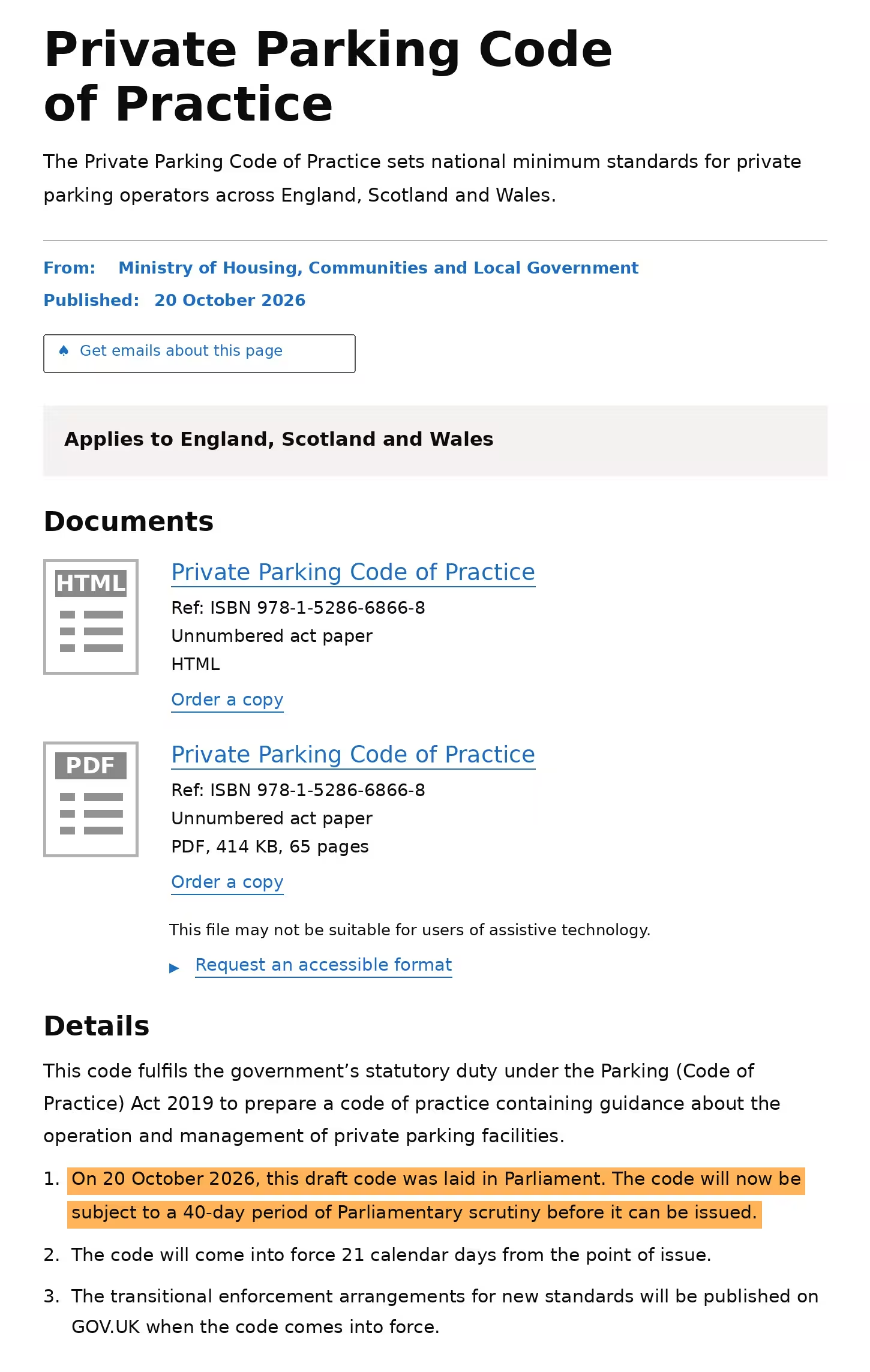
Government announcement of the October 2026 Private Parking Code of Practice, including parking-charge limits and new appeal protections.
How Do Driveway Parking Rules Affect Homeowners, Landlords and Businesses Financially?
Driveway parking disputes can create financial consequences beyond parking penalties.
For homeowners, reliable access to off-street parking may influence daily transport arrangements and the practical value of a property.
For landlords, driveway availability may form part of the features advertised to tenants.
For businesses, parking access can affect deliveries, customer visits and commercial operations.
Our financial assessment identifies three particularly important considerations.
Property Access and Parking Value
An authorised off-street parking space can provide practical value in locations where on-street parking is limited or subject to restrictions.
However, that value depends on several factors:
- Whether the vehicle can legally access the driveway.
- Whether the parking area is large enough for the intended vehicle.
- Whether the access is shared or exclusively controlled.
- Whether local parking restrictions create operational problems.
- Whether insurance and property documents permit the proposed use.
Someone considering purchasing a property should therefore establish whether an advertised driveway has a properly authorised vehicle crossing.
An attractive front-garden parking area is not necessarily a legally approved vehicle access.
Business Delivery and Operational Costs
Consider a hypothetical small business that experiences four obstructed deliveries each month.
If each interruption creates £15 in additional driver time or rearrangement costs, the monthly financial impact would be:
| Cost calculation | Amount |
| Additional cost per interruption | £15 |
| Interruptions per month | 4 |
| Monthly additional cost | £60 |
| Annual additional cost | £720 |
This is an illustrative calculation rather than measured average business losses.
It demonstrates why reliable property access can matter for tradespeople, delivery operators, garages and companies receiving regular goods deliveries.
Insurance and Property Responsibilities
Homeowners using their driveways commercially should review the relevant insurance arrangements.
Standard domestic policies may not automatically cover every risk associated with paying customers parking on the property.
Landlords and leaseholders may also face restrictions under lease agreements, tenancy terms, planning conditions or management-company rules.
Anyone planning to generate income from an unused parking area should investigate these matters before advertising the space.
Can You Rent Out Your Driveway and Make Money in 2027?
Yes, renting out an available private parking space can be a source of additional income, provided the owner or occupier has the necessary rights and complies with applicable restrictions.
The financial attraction depends on location, parking demand, operating costs and taxation.
For example:
| Monthly driveway rental income | Annual gross income |
| £50 | £600 |
| £75 | £900 |
| £100 | £1,200 |
| £150 | £1,800 |
| £200 | £2,400 |
These amounts are hypothetical examples, not verified average market rental prices.
Does HMRC Tax Driveway Rental Income?
HMRC specifically recognises income from renting out land, including a driveway, as income that may need to be declared.
For an eligible individual, the property allowance can provide up to £1,000 of tax relief per tax year.
However, the allowance applies subject to qualifying conditions and must be considered alongside other relevant property income.
For example, someone earning £900 a year from driveway rental may fall within the property allowance if they have no other relevant property income and meet the eligibility rules.
Someone earning £1,800 may need to declare the income and determine whether claiming the allowance or deducting allowable expenses is more advantageous.
An important distinction for 2027 is the Government’s October 2026 announcement that the trading allowance will increase from £1,000 to £3,000 from 6 April 2027, subject to implementation through the Finance Bill.
This increase does not automatically raise the separate property allowance to £3,000.
Ordinary driveway letting should not automatically be treated as qualifying trading income merely to obtain the higher allowance.
For homeowners considering parking-space rental as an income stream, the principles of renting out property are also relevant to permission, insurance, contractual responsibilities and taxation.
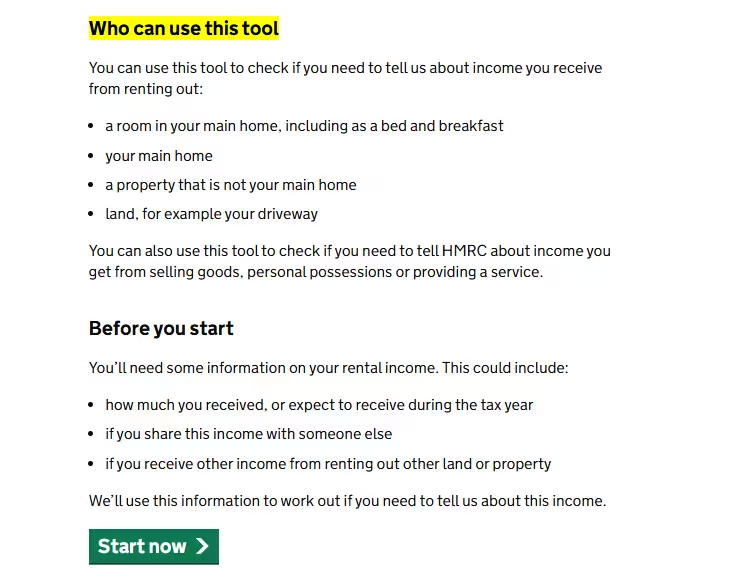
HMRC’s official guidance identifying driveway rental as a form of land or property income.
Are There Special Rules for Electric Cars Parked on Driveways?
Electric vehicle ownership introduces additional issues where charging cables cross or approach public footways.
The Highway Code advises drivers using public charging points to avoid creating trip hazards with charging cables.
Homeowners should not assume they can place an unprotected charging cable across a public pavement without permission.
Depending on the local authority, a suitable cable channel, approved installation or another arrangement may be required.
Vehicle owners should also ensure that a parked electric car does not overhang the pavement.
From a financial perspective, a compliant home charging installation may involve upfront costs but can reduce dependence on public charging facilities.
However, the exact savings depend on electricity tariffs, vehicle efficiency and charging patterns.
The existence of an EV charger does not create an exemption from driveway, pavement or dropped-kerb parking rules.
What Do Motoring Experts Say About the New Parking Rules?
The 2026 pavement-parking reforms have attracted attention from motoring organisations concerned with balancing road access and pedestrian safety.
In a published response on 8 January 2026, Rod Dennis, RAC Senior Policy Officer, said:
“no pavement user should be made to walk or wheel into the road because of someone else’s inconsiderate parking.”
His comments reflect a central concern behind the reforms: pavements must remain usable by pedestrians, wheelchair users, parents with pushchairs and others who need accessible routes.
Dennis also argued that the proposed approach should allow councils to tackle problematic pavement parking while permitting limited parking where it does not inconvenience pedestrians and helps traffic flow.
This is an important distinction.
The debate is not simply about increasing parking fines. It concerns how authorities can maintain pedestrian accessibility while responding to the practical constraints of narrow residential streets.
Our assessment is that local implementation will determine how significant the proposed changes become for individual homeowners and motorists in 2027.
Which Driveway Parking Issues Should Motorists Prioritise in 2027?
To make our comparison practical, we have assigned editorial importance ratings to the main driveway-parking issues.
These are our subjective priority ratings, based on the seriousness of the potential consequences and the usefulness of checking the rule before parking. They are not official government scores, measured enforcement probabilities or statistics from a driver survey.
| Driveway parking issue | Editorial priority rating | Reason |
| Blocking an authorised dropped kerb | 98% | Direct enforcement and access-obstruction concerns |
| Creating dangerous road obstruction | 97% | Potential road-safety and police enforcement consequences |
| Parking on a pavement in London or Scotland | 96% | Established legal prohibitions with limited exceptions |
| Parking in front of shared access | 94% | Can interfere with several households or businesses |
| Checking new 2027 pavement-parking powers | 92% | Important developing enforcement area |
| Understanding private parking contracts | 88% | Financial risk from parking charges |
| Verifying permission for driveway rental | 86% | Property, contractual and tax implications |
Our ratings place the greatest importance on avoiding obstruction and complying with established law.
The new 2027 developments are significant, but motorists should not overlook restrictions that already apply.
Conclusion
The UK Highway Code driveway parking rules for 2027 remain centred on preventing obstruction, protecting pedestrian access and ensuring motorists park legally.
The developments announced in 2026 could strengthen pavement-parking enforcement in England, but they should not be confused with an immediate nationwide ban.
Homeowners should understand the legal status of their driveway access, while drivers must consider dropped kerbs, road restrictions and other road users before leaving a vehicle.
Businesses and landlords should also account for access, insurance and potential parking-related costs.
Checking local council regulations alongside the Highway Code remains the most reliable way to avoid disputes and unnecessary penalties.
Frequently Asked Questions
Is it illegal to block someone’s driveway in the UK?
Blocking an authorised driveway entrance can result in enforcement action, especially when a vehicle is parked alongside a qualifying dropped kerb. The exact offence and authority responsible depend on the location and circumstances.
Can I park across my own dropped kerb?
Sometimes. An exception may apply to a residential driveway serving a single property where the occupier consents, but shared accesses, existing restrictions and pavement-parking rules can prevent this.
Can you get fined for parking outside someone’s house?
Not simply because the house belongs to someone else. However, drivers can be penalised for breaching parking restrictions, blocking a qualifying dropped kerb or causing an unlawful obstruction.
Will driveway parking fines increase in 2027?
There is no confirmed single nationwide driveway-parking fine increase applying to every council. England has announced plans for additional pavement-obstruction enforcement powers, but actual penalties depend on the applicable rules and authority.
Can someone park directly opposite my driveway?
Potentially, yes. Parking opposite a driveway is not automatically prohibited, but it can become an enforcement issue if existing restrictions are breached or an unlawful obstruction is caused.
Can I stop someone parking outside my house?
You cannot normally reserve an unrestricted public-highway parking space outside your home. Where an authorised driveway is obstructed or parking restrictions are breached, the council or police may be able to intervene.
Do Blue Badge holders have permission to park over dropped kerbs?
A Blue Badge does not provide a general exemption from dropped-kerb restrictions. Drivers must still comply with applicable parking laws and avoid causing obstruction.
Are driveway parking rules changing across the whole UK in 2027?
Not in one uniform way. England has announced a phased approach to additional pavement-parking enforcement, while Scotland already has national restrictions and Wales and Northern Ireland operate different legal frameworks.
Hannah is a London lifestyle and consumer writer at London Insider News, covering property, transport, local developments, cost-of-living issues and stories affecting everyday life across the capital.
More from TRANSPORT
Check Congestion Charge 2027: How to Check by Number Plate, Postcode and Payment Status?
Before driving into central London, checking the Congestion Charge can prevent an £18 daily expense from…
Pay Stansted Drop Off Charge: How to Pay Online, Current Fees, Deadlines and Free Alternatives?
Drivers using London Stansted Airport's Express Set Down area must pay a drop-off charge after their…
Do I Need to Pay Congestion Charge in London? 2027 Rules, 2026 Updates, Costs and Exemptions
If you're planning to drive through central London, you may be wondering, do I need to…