John Healey Budget Tax Plans 2026: What London Businesses, Homeowners and Taxpayers Should Expect?
Explore John Healey’s 2026 Budget tax plans, including potential changes to bank taxes, Capital Gains Tax, family business transfers and property taxation, and discover how the proposed measures could affect London businesses, investors, homeowners and households.
 Hannah
London Lifestyle & Consumer Writer
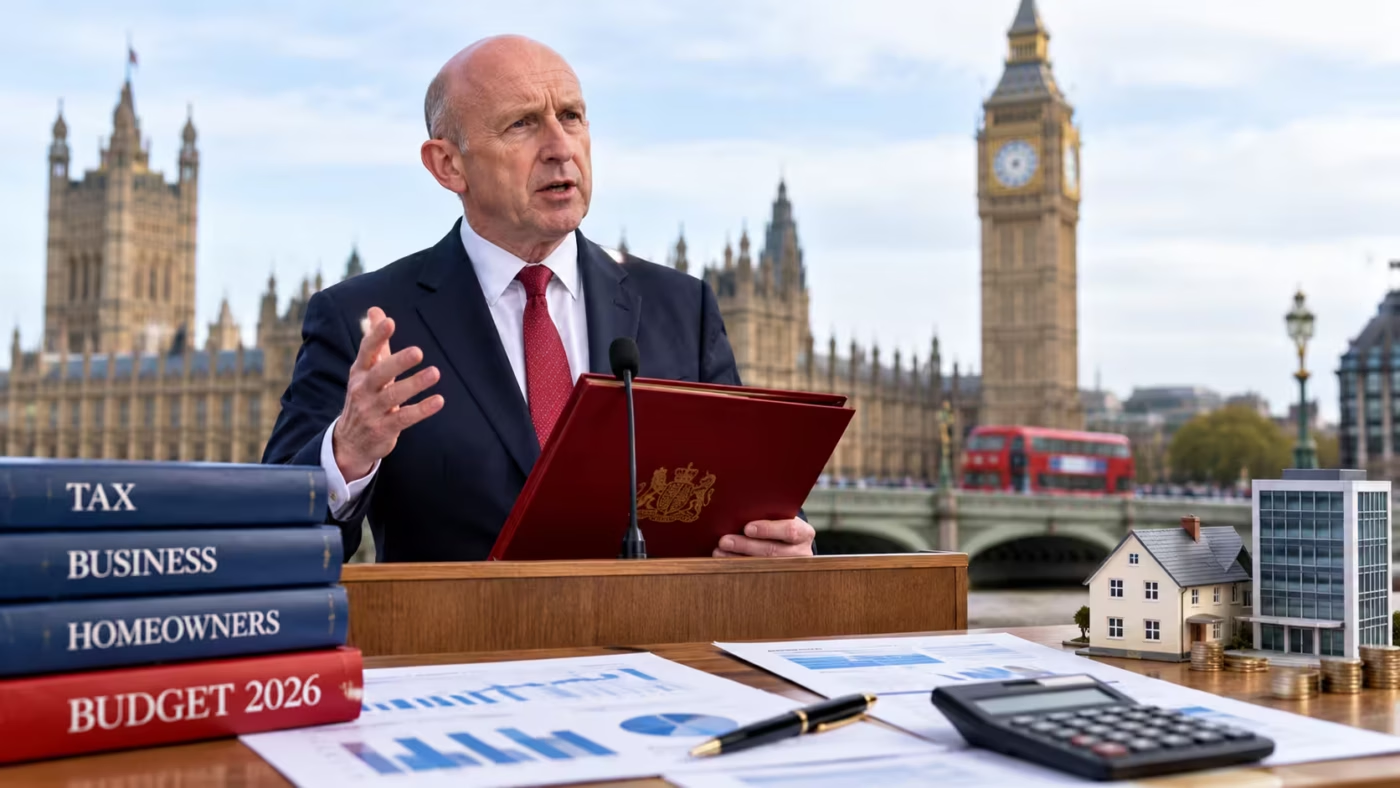
John Healey’s Budget tax plans are attracting growing attention across London as the Chancellor prepares to deliver his first Autumn Budget on 28 October 2026.
With pressure mounting on Britain’s public finances, the Treasury is considering how to generate additional revenue while supporting economic growth, protecting businesses and easing household living costs.
Reports suggest that banks could face higher taxes, while proposals affecting family business transfers have raised fresh concerns among entrepreneurs. Meanwhile, a significant increase in Capital Gains Tax now appears less likely following warnings about its potential consequences for investment.
For London, these decisions carry particular importance. The capital is home to major financial institutions, thousands of family-run enterprises, high-value residential property and households already managing expensive mortgages, rents and energy bills.
We analysed government announcements, parliamentary arguments, independent economic assessments and publicly reported views from prominent business leaders to examine which policies could be announced, what politicians are proposing and how the Budget might influence London’s economy.
The key distinction is that several major tax measures remain unconfirmed. The final decisions will only become clear when the Chancellor delivers his Budget.
What Are John Healey’s Main Budget Tax Plans for October 2026?
John Healey is approaching the Budget with three competing priorities: maintaining fiscal discipline, strengthening economic growth and providing some relief from rising living costs.
The current debate centres on whether the Treasury can fund additional commitments without significantly increasing taxes on employees, employers and investors.
The government has maintained Labour’s manifesto commitment not to raise the main rates of Income Tax, VAT or employee National Insurance contributions. However, that does not prevent changes to other taxes, reliefs or thresholds.
Our review identifies eight major policy areas.
| Budget measure | Position as of 20 October 2026 | Potential London impact |
| Bank corporation tax surcharge | Increase from 3% to 8% reportedly under consideration | Banking investment, lending and City employment |
| Capital Gains Tax | Broad rate increase reportedly rejected | Entrepreneurs, investors and property sellers |
| Family business transfers | Potential Income Tax treatment reported, not confirmed | Family-owned London companies |
| Mansion tax threshold | Proposal to lower £2m threshold to £1.5m reportedly dropped | High-value property owners |
| Business rates relief | 20% reduction already announced for qualifying hospitality venues from April 2027 | Pubs, music venues and local businesses |
| Energy and household support | Further targeted assistance expected | Households and energy-intensive employers |
| Online marketplace taxation | Additional compliance measures reportedly under consideration | Online retailers and high street competition |
| Regional tax devolution | Further proposals anticipated | London’s future local funding arrangements |
These measures should not be treated as a single confirmed package.
Some represent existing policy, others are being discussed by ministers, while several are proposals advanced by opposition parties or independent organisations.
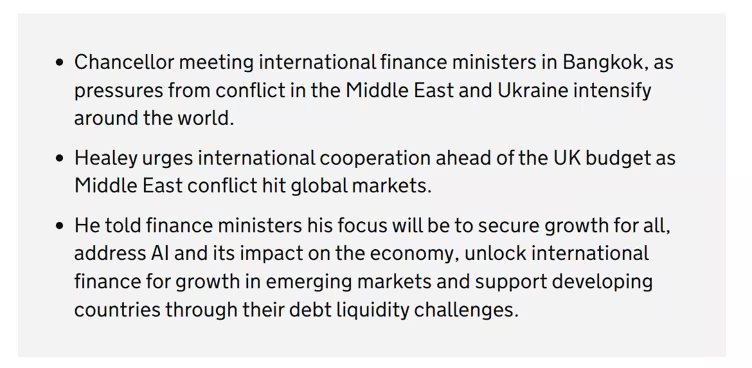
Official HM Treasury announcement from 15 October 2026 showing Chancellor John Healey’s commitment to economic resilience, growth and fiscal discipline ahead of the Autumn Budget.
Why Is John Healey Considering Tax Changes in the 2026 Budget?
The Chancellor faces mounting pressure from higher government borrowing costs, inflation, defence commitments and demands for additional household support.
The Middle East conflict has complicated the UK’s financial outlook by increasing energy-market uncertainty and influencing inflation expectations.
Higher borrowing costs matter because more government revenue may be required to service public debt, leaving less available for infrastructure, public services and tax reductions.
At the March 2026 forecast, the government had approximately £23.6 billion of fiscal headroom against its principal borrowing rule.
That financial buffer has since come under pressure.
However, fiscal headroom is not the same as money available to spend immediately. It measures how much room government forecasts leave before the fiscal rules would be breached.
The Institute for Fiscal Studies has separately highlighted spending pressures potentially reaching approximately £35 billion by the end of the decade if ministers seek to protect public services against inflation and meet defence commitments.
These are different measures and should not be added together as though they represent a single Treasury deficit.
What Has John Healey Said About His Budget?
During the IMF meetings in Bangkok on 15 October 2026, Healey stressed the importance of maintaining confidence in Britain’s economy.
He stated:
“The UK economy is resilient and my Budget will protect Britain’s resilience through this turbulent time.”
The Chancellor also identified fiscal discipline as an important foundation for supporting families and businesses.
Our assessment is that his approach combines limited fiscal intervention with efforts to reassure financial markets.
For London businesses, that could mean targeted assistance rather than sweeping reductions across the tax system.
Why Does Economic Stability Matter to London?
London’s economy is particularly exposed to changes in interest rates, financial investment and property valuations.
A rise in borrowing costs can affect:
- Commercial property investment and refinancing.
- Mortgage rates for homeowners and landlords.
- Business loans and working capital.
- Startup fundraising and investment.
- Consumer spending in shops, restaurants and hospitality venues.
For example, a business carrying £500,000 of variable-rate borrowing would face an additional £5,000 in annual interest costs if its borrowing rate increased by one percentage point.
This is an illustrative calculation, not a forecast of how lending rates will respond to the Budget.
Our analysis suggests that maintaining investor confidence is therefore economically significant even where a particular Budget measure does not directly change a London company’s tax bill.
Will John Healey Increase Taxes on UK Banks?
One of the most closely watched proposals concerns a possible increase in the Bank Corporation Tax Surcharge.
The existing surcharge is generally 3% on qualifying banking profits above the applicable £100 million allowance, in addition to Corporation Tax.
Reports suggest that the Chancellor could restore the surcharge rate to 8%.
Such a move has been estimated to raise more than £2 billion annually, although the final revenue would depend on the detailed policy and economic conditions.
The discussion has particular importance for London because of the concentration of major financial institutions in the City and Canary Wharf.
How Would a Bank Tax Increase Work?
A five-percentage-point rise would increase the surcharge liability on qualifying profits.
Consider a simplified example of a banking company with £200 million in surcharge profits and the full £100 million allowance available.
| Calculation | Current 3% | Hypothetical 8% |
| Surcharge profits | £200 million | £200 million |
| Assumed allowance | £100 million | £100 million |
| Profits subject to surcharge | £100 million | £100 million |
| Surcharge liability | £3 million | £8 million |
| Additional annual liability | — | £5 million |
The example assumes the allowance remains unchanged, ignores specific adjustments and does not represent an actual bank’s tax computation.
For the financial sector, the wider concern is whether an increase would affect investment decisions, hiring and the availability of business finance.
What Do Politicians Think About Higher Bank Taxes?
John Healey has acknowledged that banks play an important role in economic growth, while declining to disclose specific Budget decisions in advance.
The Trades Union Congress has taken a more interventionist position.
Its general secretary, Paul Nowak, has argued:
“It’s time to make sure banks pay their fair share.”
The TUC has supported increasing the surcharge further than the 8% level discussed in media reports.
Conservative politicians have raised concerns that additional banking taxes could undermine London’s competitiveness relative to major international financial centres.
Shadow Chancellor Andrew Griffith has argued that growth should take priority over additional taxation of financial institutions.
The competing arguments are economically significant.
Supporters believe higher taxes could capture a greater share of exceptional banking profits and finance public support.
Opponents argue that increasing financial-sector taxation may discourage investment and ultimately affect businesses seeking finance.
Neither outcome should be treated as automatic. Much would depend on the scale of the tax increase, international competitiveness and how financial institutions respond.
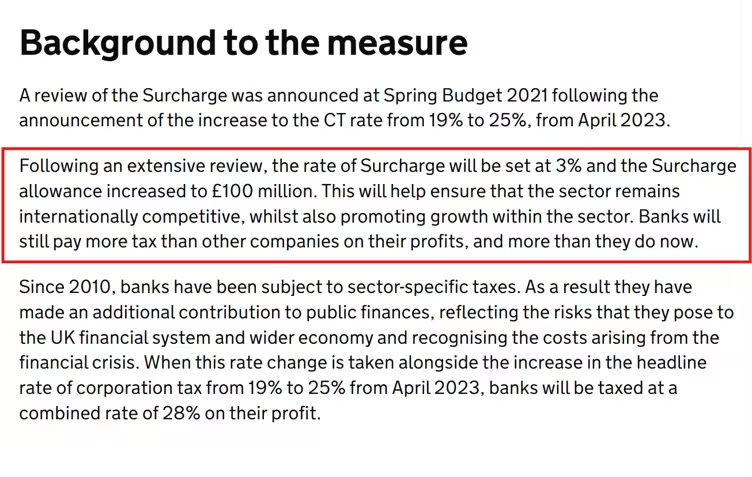
Official HMRC banking-sector tax guidance showing the existing 3% Bank Corporation Tax Surcharge and the £100 million allowance.
Has John Healey Ruled Out Higher Capital Gains Tax?
Recent reporting indicates that John Healey has rejected proposals to increase the main Capital Gains Tax rates in the October Budget.
The reported decision follows pressure from some senior Labour figures and policy organisations to bring the taxation of capital gains closer to Income Tax rates.
Under the 2026/27 rules, the main Capital Gains Tax rates for individuals are generally:
| Tax category | Current rate |
| Capital Gains Tax within the available basic-rate band | 18% |
| Capital Gains Tax at higher rates | 24% |
| Business Asset Disposal Relief on qualifying gains | 18% |
| Higher-rate Income Tax in England | 40% |
| Additional-rate Income Tax in England | 45% |
The £3,000 annual Capital Gains Tax exemption continues to apply to individuals, subject to the relevant rules.
The economic debate concerns whether higher rates would raise additional revenue or encourage investors to postpone disposals, restructure ownership or move investment elsewhere.
Why Do Some Labour Politicians Support Higher Capital Gains Tax?
Prominent Labour figures, including Louise Haigh and Wes Streeting, have previously expressed support for increasing the taxation of capital gains.
Supporters of closer alignment argue that the existing difference between taxes on earnings and gains can produce unequal outcomes.
For instance, employment earnings and investment gains may face materially different tax rates even where the financial amounts are similar.
Those supporting reform argue that reducing the difference could improve fairness and provide additional revenue for public services.
However, higher tax rates do not necessarily produce proportionately higher receipts.
Investors may change when and how they realise gains.
What Do Business Leaders Think?
Lord O’Neill of Gatley, who has advised Prime Minister Andy Burnham, has warned that:
“raising capital gains tax would send very much the wrong message to business”.
Entrepreneur Sir Richard Harpin, the founder of HomeServe, has also argued against equalising Capital Gains Tax and Income Tax rates.
Speaking in October 2026, Harpin emphasised the importance of rewarding entrepreneurial risk-taking.
His position is that a favourable environment for entrepreneurs encourages investment and business formation.
Our assessment is that Capital Gains Tax stability would be particularly relevant to London’s startup ecosystem, private equity industry and business owners preparing to sell companies.
A founder considering a significant sale needs to understand the after-tax proceeds before making investment, retirement or succession decisions.
For example, a £100,000 taxable gain at a 24% Capital Gains Tax rate would produce a £24,000 liability.
At a hypothetical 30% rate, the liability would increase to £30,000.
That represents an additional £6,000, equivalent to a 25% increase in the tax bill.
These figures assume the entire gain falls within the stated rate, after relevant allowances and reliefs have been accounted for.
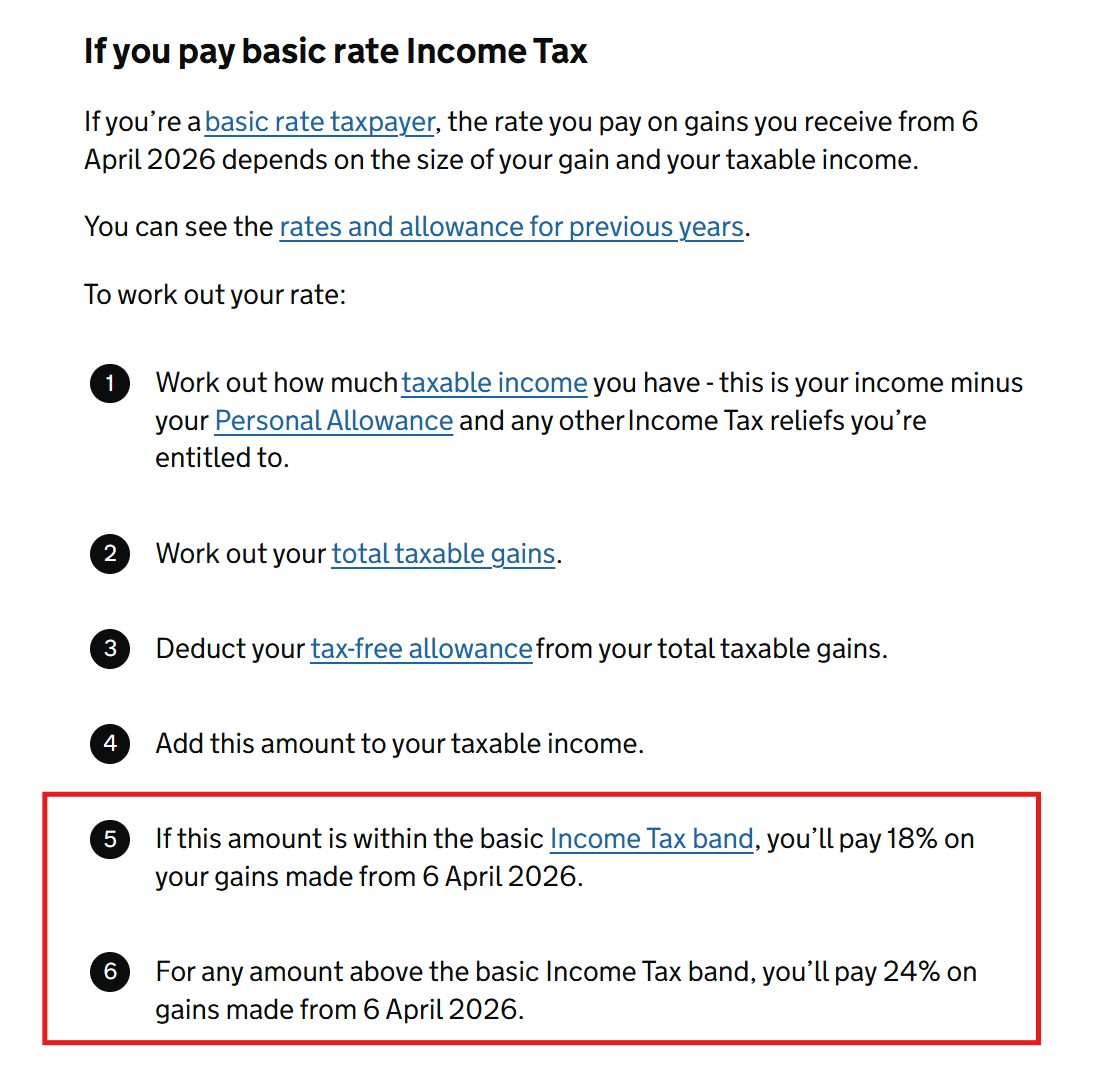
Official HMRC Capital Gains Tax rates for 2026/27, displaying the 18% and 24% rates and the 18% Business Asset Disposal Relief rate.
Could Family Business Transfers Face Higher Taxes?
Another important development emerged in October when reports suggested that the Chancellor was considering a change to the taxation of family business transfers.
The reported proposal could bring certain transfers of businesses to the next generation within Income Tax rather than the existing Capital Gains Tax framework.
The Treasury has not confirmed the details.
This distinction is crucial because transferring a business does not currently produce one universal tax outcome.
Depending on the circumstances, a transfer may involve Capital Gains Tax, hold-over relief, Inheritance Tax, Business Relief and other rules.
There is not yet sufficient confirmed information to determine exactly which transfers the reported policy would affect or how the tax liability would be calculated.
Why Would This Matter to London Entrepreneurs?
Family-owned enterprises are important throughout London, including independent retailers, wholesalers, restaurants, property companies, professional services businesses and manufacturing operations.
Many businesses are built over several decades and eventually transferred to children or other family members.
The tax consequences can influence whether the family retains the business or sells it.
Consider a hypothetical business with a market value of £3 million.
If the owner plans to transfer that business to the next generation, advisers must determine the ownership structure, base cost, available reliefs and applicable tax rules.
A higher effective tax burden could create difficulties if the family has significant business value but limited available cash.
However, it would be misleading to apply the 45% Income Tax rate automatically to the company’s entire valuation.
The reported proposal has not established such a calculation.
How Is Business Inheritance Tax Treated Now?
Under the rules introduced in April 2026, the allowance for 100% Agricultural Relief and Business Relief is generally £2.5 million per individual for qualifying assets.
Unused allowances may be transferable between qualifying spouses or civil partners.
Qualifying value above the available allowance can receive 50% relief, subject to the rules.
These Inheritance Tax provisions are separate from the reported Income Tax proposal concerning family business transfers.
For business owners reviewing ownership and succession arrangements, it is important to understand the wider financial and legal obligations involved in operating and transferring an income-generating property or business asset.
Until the Treasury confirms its plans, entrepreneurs should avoid making irreversible transfers based solely on press speculation.
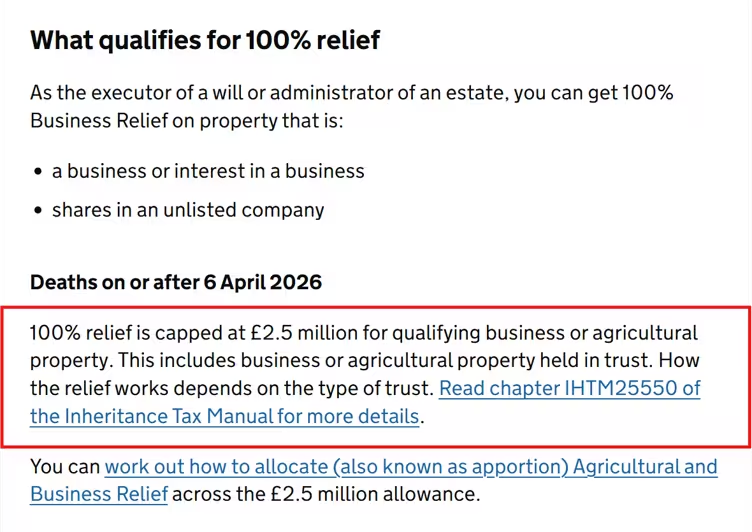
Official HMRC Business Relief guidance confirming the £2.5 million allowance for qualifying business and agricultural assets from April 2026.
Will London Homeowners Face a Higher Mansion Tax?
The future of Britain’s so-called mansion tax is especially relevant to London.
The High Value Council Tax Surcharge, announced in the November 2025 Budget, is scheduled to apply from April 2028 to qualifying residential properties worth £2 million or more in England.
It is designed as an additional annual charge on property owners.
The planned charging bands are:
| Property value | Proposed annual surcharge |
| £2 million to £2.5 million | £2,500 |
| £2.5 million to £3.5 million | £3,500 |
| £3.5 million to £5 million | £5,000 |
| Above £5 million | £7,500 |
These amounts are in addition to ordinary Council Tax.
Earlier reports suggested that the government might reduce the entry threshold to £1.5 million, bringing more properties within scope.
However, more recent reporting indicates that Healey has rejected that expansion.
The underlying £2 million policy remains distinct from the rejected £1.5 million proposal.
Which London Property Owners Would Be Most Affected?
High-value properties are concentrated in parts of London, including Kensington and Chelsea, Westminster, Camden, Richmond and other expensive residential areas.
The effect depends on the individual property’s valuation, not simply the borough in which it is located.
For example, a qualifying £3 million London property would fall within the £3,500 annual surcharge band under the published framework.
Over five years, that would represent £17,500 before any inflation adjustments, applicable reliefs or changes to the rules.
The surcharge is not an annual percentage of property value.
Someone purchasing an expensive London home should therefore distinguish the charge from Stamp Duty Land Tax, which is generally paid on acquisition.
Property investors calculating the full cost of purchasing a turnkey property must separately account for Stamp Duty Land Tax, financing expenses, service charges and ongoing ownership taxation.
Our assessment is that this policy has greater direct significance for a relatively small group of property owners than for the average London household.
Nevertheless, changes to high-value property taxation can influence transaction decisions, investment expectations and the behaviour of owners considering whether to move.
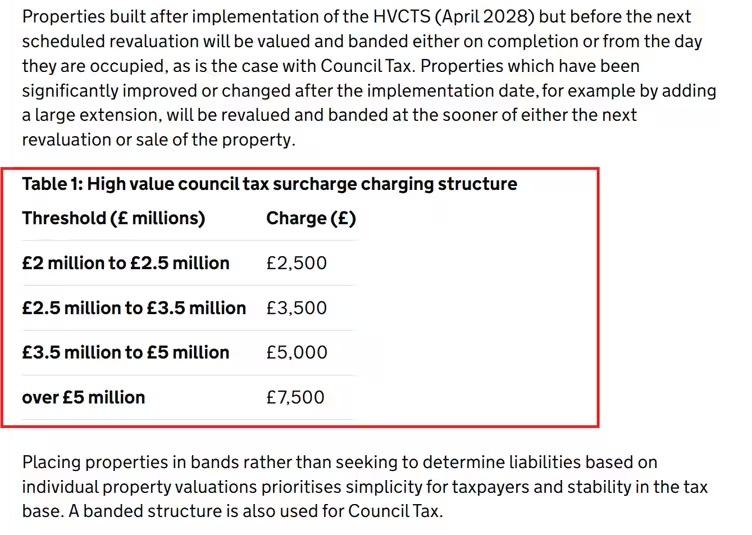
Official HM Treasury High Value Council Tax Surcharge consultation showing the £2 million threshold, four property-value bands and proposed annual charges.
What Are Britain’s Leading Politicians Proposing for the Budget?
John Healey’s Budget has become a wider political debate about whether the UK should increase taxation, reduce public expenditure or change how revenue is collected.
Although politicians share concerns about economic growth and living costs, they differ substantially on how government should respond.
John Healey: Fiscal Discipline and Targeted Support
The Chancellor’s approach emphasises economic stability, credible public finances and measures that can help households and businesses without undermining investor confidence.
His reported reluctance to pursue a major Capital Gains Tax increase suggests a preference for avoiding changes that could create significant uncertainty for investors.
However, further taxation of banks remains under discussion.
Andy Burnham: Business Growth and Local Economic Support
Prime Minister Andy Burnham has emphasised supporting local businesses and shifting more economic opportunity beyond Westminster.
In discussing business rates reductions, Burnham stated:
“I’m listening to small business owners so we can work together to deliver jobs and growth in every postcode.”
His government has already announced a 20% business rates reduction for qualifying pubs, social clubs and live music venues from April 2027.
The policy is particularly relevant to London hospitality businesses facing elevated operating costs.
Burnham has also promoted greater regional fiscal autonomy.
However, proposals to change the distribution of tax revenues between central and local government should not be confused with an immediate increase in personal Income Tax for Londoners.
Kemi Badenoch: Reduce Borrowing and Government Spending
Conservative leader Kemi Badenoch has challenged Labour’s spending plans and argued that greater fiscal discipline should come from reducing expenditure rather than relying on further tax increases.
During September’s parliamentary debate, Badenoch presented the government’s choices as higher taxation, additional borrowing or spending reductions.
Her wider position involves reducing state expenditure and limiting the tax burden on businesses.
The Conservatives have also announced an alternative inheritance tax policy for family homes, including a proposed exemption for qualifying inherited family residences.
This is an opposition proposal rather than a change already implemented by Healey’s Treasury.
Andrew Griffith: Protect Investment and Avoid New Tax Rises
Shadow Chancellor Andrew Griffith has argued for reducing public spending and avoiding additional taxes on businesses.
He has called for the Chancellor to deliver a “get a grip” Budget.
Griffith’s argument is that further taxation could reduce the incentive for private investment and make it harder for companies to expand.
This position is particularly relevant to debates over financial-sector taxation and employer costs.
Louise Haigh and Wes Streeting: Greater Tax Fairness
Senior Labour figures Louise Haigh and Wes Streeting have been associated with proposals to increase Capital Gains Tax or bring it closer to Income Tax treatment.
Their arguments reflect a broader debate about how wealth and earnings should contribute to the public finances.
Supporters believe reform could make the tax system more equitable.
Critics warn that substantial increases could discourage business disposals and weaken investment incentives.
The proposals should be understood as part of Labour’s internal policy debate, not as confirmed measures in Healey’s Budget.
Daisy Cooper: Tax Windfalls and Cut Living Costs
The Liberal Democrats have proposed an alternative £14 billion emergency package to support households and high street businesses.
Their proposals include a 10p fuel-duty reduction, lower public transport fares and a temporary cut in hospitality VAT from 20% to 15%.
Liberal Democrat Treasury spokesperson Daisy Cooper said:
“Our £14bn emergency package would cut energy and transport costs and give struggling high streets a fighting chance.”
The party proposes funding its package through measures including a tax on certain bank windfall profits, recoveries from energy network operators and additional energy-sector revenue.
These remain Liberal Democrat proposals, not confirmed government policy.
Rachel Reeves and Jeremy Hunt: The Tax Policy Inheritance
Former Chancellor Rachel Reeves established much of the tax and spending framework inherited by Healey.
Her earlier Budgets included significant changes affecting employers, capital taxation and property.
Former Conservative Chancellor Jeremy Hunt also influenced the current banking tax framework, including changes introduced when the Corporation Tax rate increased.
Healey must now decide which existing arrangements to retain and whether selected changes can raise revenue without discouraging growth.
| Political figure | Main position | Economic priority |
| John Healey | Fiscal discipline and targeted intervention | Stability and funded commitments |
| Andy Burnham | Business support and fiscal devolution | Regional and local growth |
| Kemi Badenoch | Spending reductions over further taxation | Lower borrowing and smaller state |
| Andrew Griffith | Avoid new business taxes | Private investment |
| Louise Haigh | Greater taxation of capital gains | Distributional fairness |
| Wes Streeting | Greater taxation of capital gains | Revenue and fairness |
| Daisy Cooper | Tax selected windfalls and reduce living costs | Household purchasing power |
| Rachel Reeves | Existing tax and spending framework | Fiscal consolidation |
| Jeremy Hunt | Previous banking tax and wider fiscal policies | Investment competitiveness |
How Could the Budget Affect London Employers and Entrepreneurs?
For businesses, the most important tax question is not necessarily whether the headline Corporation Tax rate changes.
Employment costs, business rates, energy bills and access to finance can have a more immediate influence on profitability.
Employment Taxes and Hiring Decisions
Employers across the UK currently face a 15% employer National Insurance contribution rate on earnings above the relevant secondary threshold, subject to reliefs and exceptions.
Major retailers and hospitality operators have asked the Chancellor to consider measures to reduce the cost of hiring young workers.
Some business representatives have proposed increasing the employer National Insurance secondary threshold from £5,000 to £6,000.
Such a change has not been confirmed.
For a qualifying employee earning sufficiently above the relevant threshold, a £1,000 increase could reduce the employer’s annual National Insurance liability by up to £150, assuming the rate and other rules remained unchanged.
For an eligible employer with 20 such employees, that could represent £3,000 annually before considering other reliefs.
This simplified illustration explains why relatively small changes in payroll taxation can matter to businesses with significant staffing requirements.
Business Rates and Hospitality
London hospitality companies operate in a particularly competitive environment.
Rent, wages, energy, maintenance and business rates can consume a substantial proportion of revenue.
The announced 20% business rates reduction for qualifying pubs, clubs and live music venues from April 2027 could therefore provide relief.
However, the precise saving will depend on eligibility and the business’s actual rates liability.
A business paying £12,000 annually in rates would save £2,400 if a straightforward 20% reduction applied to its entire qualifying bill.
That would not solve every profitability challenge, but it could improve cash flow.
Investment and Business Confidence
Publicly reported concerns from business leaders indicate that predictability is a major consideration.
Shevaun Haviland, director-general of the British Chambers of Commerce, has urged the Chancellor to take meaningful action on energy, business rates and employment costs.
Entrepreneur Sir Richard Harpin has separately argued that tax policy should continue rewarding the financial risks taken by company founders.
These views highlight different but related needs: existing businesses want operating-cost relief, while entrepreneurs and investors want confidence that returns on successful ventures will remain attractive.
Our assessment suggests that policy certainty may be almost as important as the immediate value of any individual tax reduction.
What Could the Budget Mean for London’s Working Families?
London households face a combination of income taxation, housing expenses, transport costs and general inflation.
A Budget that leaves headline Income Tax rates unchanged can still influence take-home pay and purchasing power.
Income Tax Thresholds and Fiscal Drag
For 2026/27, the standard Personal Allowance remains £12,570.
Where tax thresholds remain frozen while salaries increase, more earnings can fall into taxable bands.
This is commonly described as fiscal drag.
For example, a worker whose salary rises from £45,000 to £47,000 will normally pay additional Income Tax on the increase, even if the percentage rates remain unchanged.
Their take-home income may increase by less than their gross salary, particularly after National Insurance, pension contributions and other deductions.
For renters, the relevant question is how much disposable income remains after taxation and essential costs.
The relationship between earnings and how much rent a household can realistically afford in London is therefore important when evaluating whether the Budget improves living standards.
Energy Bills and Transport Costs
Further household assistance is expected to be a major political priority.
Potential measures being discussed include targeted energy support and changes to scheduled fuel-duty increases.
London households rely heavily on public transport, while many workers and businesses outside central London also depend on cars and vans.
Consequently, the effects of transport and energy policy vary between households.
A £100 annual energy saving may be relatively modest for a high-income homeowner but materially more significant for a household with little disposable income.
Our analysis is that the distribution of support will matter as much as the headline amount announced.
What Do Independent Economists Think About Healey’s Budget?
Independent economists have warned that the Chancellor cannot indefinitely postpone difficult decisions over taxation and expenditure.
Helen Miller, director of the Institute for Fiscal Studies, told ITV News:
“The Chancellor could choose to accept that inflation will effectively cut the quality of public services.”
Her comments underline the relationship between inflation and departmental spending.
Even if a department receives the same amount of money, higher costs may reduce the quantity or quality of services it can provide.
The Institute for Government has also argued that Healey would benefit from publishing a clearer long-term tax strategy.
Such a strategy could explain the principles behind taxation decisions, identify priority reforms and reduce unnecessary uncertainty.
The central economic question is whether ministers can maintain credible fiscal commitments while supporting productive investment.
A Budget that raises revenue immediately but damages future investment could weaken the longer-term tax base.
Conversely, extensive tax reductions without credible funding could increase borrowing pressures.
The balance between these risks is particularly important for London because of its exposure to investment flows, financial markets and property lending.
How Does Our Financial Assessment Rate the Budget Proposals?
Our editorial assessment considers how directly the debated measures could affect London residents and businesses.
The percentages below represent analytical relevance ratings, not polling results, probabilities of implementation or opinions collected through private interviews.
We considered direct financial exposure, the potential size of the effect and the importance of each subject to London’s economy.
| Policy area | London relevance rating | Our assessment |
| Banking sector taxation | 95% | Highly relevant to City employment, finance and lending |
| Family business taxation | 90% | Significant implications for business ownership and succession |
| Capital Gains Tax stability | 90% | Important for entrepreneurs and property investors |
| Energy and living-cost support | 85% | Relevant to household budgets and operating expenses |
| Employer taxation | 85% | Important for hospitality, retail and service-sector hiring |
| High-value property surcharge | 80% | Significant for affected homeowners, but narrow in coverage |
| Business rates reductions | 85% | Direct relevance to qualifying local hospitality venues |
| Regional fiscal devolution | 70% | Potential long-term effects, with many details unresolved |
These scores reflect our editorial assessment of relevance rather than a claim that the policies will deliver corresponding percentage improvements or reductions.
The analysis indicates that London’s financial sector, entrepreneurs and employers have substantial exposure to the Budget’s tax decisions.
However, ordinary households are more likely to judge the outcome through changes in energy costs, transport, employment prospects and disposable income.
What Should London Businesses Do Before 28 October?
Our review suggests that businesses should focus on confirmed tax obligations and prepare to assess potential changes once the Budget is announced.
The most useful actions are:
- Review current tax liabilities, including Corporation Tax, employer National Insurance and business rates.
- Prepare cash-flow forecasts that account for different energy and financing costs.
- Assess the timing of major business disposals or ownership transfers without acting solely on rumours.
- Revisit business succession plans where company ownership is expected to pass to family members.
- Identify the government measures directly relevant to the company’s sector.
- Compare the final Budget documents with existing rules before changing tax or investment arrangements.
For financial advisers and accountants working with London clients, particular attention should be given to the difference between Budget announcements and the dates on which legislation actually takes effect.
The Chancellor’s speech may announce measures that apply immediately, during the next tax year or several years later.
Final Assessment: Will John Healey’s Budget Help London’s Economy?
John Healey’s 2026 Budget represents an important test of the government’s ability to combine fiscal discipline with meaningful economic support.
The proposed banking tax increase demonstrates the pressure to identify additional revenue without raising the principal personal tax rates.
The reported decision not to pursue a broad Capital Gains Tax increase suggests that the Treasury is also sensitive to the risks of discouraging investment.
Meanwhile, uncertainty over family business transfers and continuing debate over property taxation illustrate how specific changes can generate concern among entrepreneurs and asset owners.
For London, the economic outcome will depend on more than the total amount raised through taxation.
It will also depend on whether businesses remain confident about expanding, whether financial institutions maintain investment and lending, and whether households experience improvements in real disposable income.
Our assessment is that the strongest Budget would provide clear tax rules, credible spending commitments and practical support for economic activity without introducing unnecessary complexity.
The final judgement must wait until 28 October, when the Treasury publishes the confirmed measures and the Office for Budget Responsibility releases its updated forecasts.
Until then, the most important distinction remains between political proposals, reported Treasury intentions and changes that have actually become law.
Frequently Asked Questions
When will John Healey announce his 2026 Budget?
John Healey is scheduled to deliver the UK Autumn Budget on 28 October 2026, when the Treasury will confirm its tax and spending measures.
Will John Healey increase Income Tax in 2026?
The government has maintained its commitment not to increase the main Income Tax rates. However, changes to other taxes or thresholds may still affect taxpayers.
Is John Healey increasing Capital Gains Tax?
Reports from October 2026 indicate that the Chancellor has rejected a broad increase in Capital Gains Tax, but final confirmation should come with the Budget.
Will banks pay more tax after the Budget?
A rise in the Bank Corporation Tax Surcharge from 3% to 8% has been reported as a possible measure. It has not yet been formally announced.
Will London homeowners pay a new mansion tax?
A High Value Council Tax Surcharge on qualifying properties worth £2 million or more is already scheduled for April 2028. Reports suggest that lowering the threshold to £1.5 million has been rejected.
Could family businesses face additional taxes?
Reports suggest changes to the taxation of some family business transfers are under consideration. The Treasury has not confirmed the proposal’s scope or implementation.
What does the Budget mean for small London businesses?
Small businesses should watch for changes to business rates, employment taxes, energy support and financing conditions. The impact will differ by industry and eligibility.
What do opposition politicians want from the Budget?
Conservatives have emphasised spending reductions and tax restraint, while the Liberal Democrats have proposed taxing selected windfall profits to finance household and high street support.
Will the Budget reduce London’s cost of living?
Targeted assistance could provide some relief, but the overall effect will depend on the confirmed policies, inflation and changes to household expenses.
Hannah is a London lifestyle and consumer writer at London Insider News, covering property, transport, local developments, cost-of-living issues and stories affecting everyday life across the capital.
More from LONDON NEWS

Nationwide UK Property Price Drop: Will House Prices Fall Further in 2027? Latest 2026 Figures and Forecasts
The Nationwide UK property price drop has become an increasingly important issue for homeowners, first-time buyers,…

Discontinued Cadbury Chocolate Back in UK: Nostalgic Favourite Returns After 18 Years as Shoppers Celebrate
Discontinued Cadbury chocolate is back in the UK, with the return of nostalgic favourites including Astros…

Which Budget Supermarket Tuna Beat John West? Full Taste Test Results and 2027 Buying Guide
Tesco Tuna Chunks in Spring Water was the budget supermarket tuna that beat John West in…