How Much Housing Benefit Can I Get in 2027? UK Rates, Eligibility, Rent Calculations and 2026 Updates
Discover how much Housing Benefit you can get in 2027, including updated UK rates, eligibility rules, savings limits, rent calculations and support for pensioners.
 Adam
London Business & News Writer

How much Housing Benefit can I get in 2027? You could receive financial assistance covering up to 100% of your eligible rent, but the actual amount depends on your income, savings, age, accommodation and household circumstances. There is no fixed Housing Benefit payment for everyone in the UK.
A pensioner renting a council property for £150 per week could potentially receive the full £150 if they qualify for maximum Housing Benefit. However, a private renter paying £1,500 per month in London may receive significantly less if their Local Housing Allowance rate is below their rent.
The distinction is becoming increasingly important in 2027.
The government confirmed on 28 October 2026 that Local Housing Allowance rates and the benefit cap will remain frozen throughout 2027/28. Although several benefit allowances are increasing in April 2027, this does not mean private tenants will automatically receive more money towards rent.
Our analysis of the latest Department for Work and Pensions (DWP) figures, official Housing Benefit regulations and London rental support limits shows that understanding your eligible rent is essential before estimating how much you could receive.
For people already struggling with rental costs, the difference between their contractual rent and their actual Housing Benefit award can amount to thousands of pounds annually.
How Much Housing Benefit Can I Get Per Week or Month in 2027?
Housing Benefit can cover all or part of your eligible rent. The maximum amount is generally determined by the rent recognised under the benefit rules, before any income-related reductions or other deductions.
Unlike Universal Credit’s standard allowance, Housing Benefit does not provide everyone with the same weekly payment.
The following table demonstrates the maximum amount someone could receive if their entire rent is eligible and no reductions apply.
| Eligible Weekly Rent | Maximum Weekly Housing Benefit | Monthly Equivalent |
| £100 | £100 | £433.33 |
| £120 | £120 | £520.00 |
| £150 | £150 | £650.00 |
| £175 | £175 | £758.33 |
| £200 | £200 | £866.67 |
| £250 | £250 | £1,083.33 |
| £300 | £300 | £1,300.00 |
These are illustrative maximum payments, not fixed government Housing Benefit rates. Monthly equivalents are calculated using 52 weeks divided by 12.
For example, a pensioner whose eligible weekly rent is £175 could receive £175 per week if they qualify for maximum assistance and no further restrictions apply.
However, someone with the same rent but higher assessable income may receive a smaller award.
Our calculations indicate that three figures must be distinguished when estimating entitlement:
- Contractual rent: The amount payable to the landlord.
- Eligible rent: The amount the Housing Benefit system recognises.
- Actual Housing Benefit: The payment remaining after the applicable financial assessment and deductions.
Someone paying £1,200 monthly rent might have only £950 recognised as eligible housing costs. Even if they qualify for maximum assistance, they would still need to fund the remaining £250.
For more detailed examples of private-sector limits, see how much Housing Benefit you can receive for private renting.
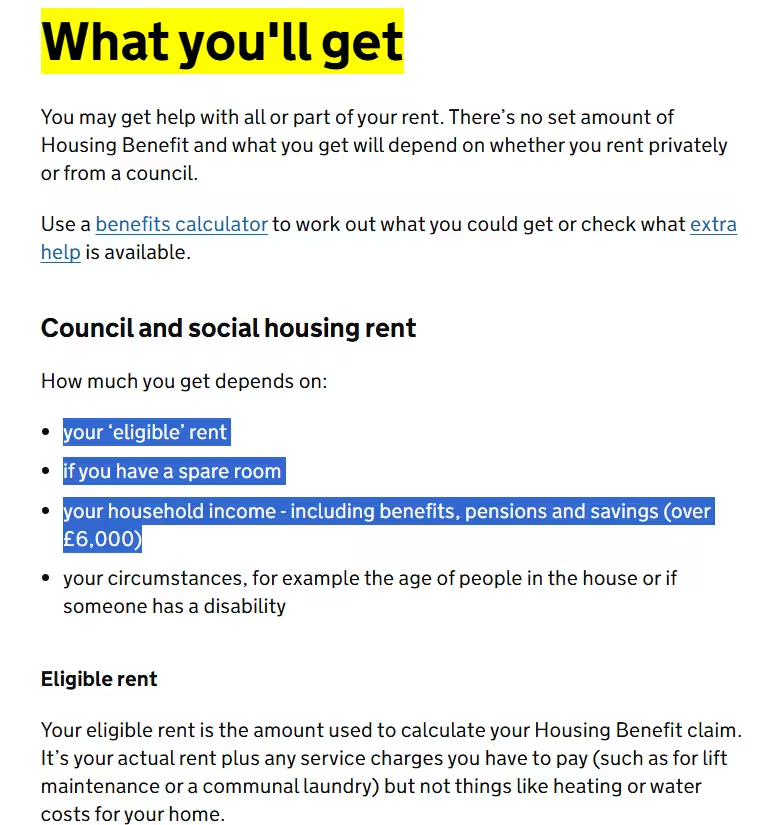
Official GOV.UK Housing Benefit guidance confirming that there is no fixed payment amount and that entitlement depends on rent, income, savings and household circumstances.
Who Can Still Claim Housing Benefit in 2027?
Housing Benefit has largely been replaced by Universal Credit for working-age people.
An important change took effect on 1 July 2026, when the government abolished most remaining working-age Housing Benefit awards outside qualifying temporary or specified supported accommodation, subject to limited exceptions.
Consequently, the type of rental assistance someone can receive in 2027 depends heavily on their age and accommodation.
| Household Circumstances | Main Housing Support Route in 2027 |
| Single person who has reached State Pension age | Housing Benefit, subject to eligibility |
| Couple where both partners have reached State Pension age | Usually Housing Benefit |
| Working-age private renter | Usually Universal Credit housing costs |
| Working-age council tenant | Usually Universal Credit housing costs |
| Resident in qualifying temporary accommodation | Housing Benefit may apply |
| Resident in specified supported accommodation | Housing Benefit may apply |
| Mixed-age couple | Usually Universal Credit, unless a qualifying exception applies |
| Existing protected Housing Benefit claimant | Depends on the applicable transitional protection |
The closure does not mean everyone receiving Housing Benefit immediately loses entitlement.
For example, people living in qualifying temporary accommodation or specified supported housing can continue receiving Housing Benefit towards rent while potentially receiving Universal Credit for other living expenses.
Certain existing claims involving protected mixed-age couples and other narrowly defined cases are also treated differently.
This is why eligibility should be established before attempting to calculate a weekly Housing Benefit payment.
For ordinary working-age tenants, Universal Credit support towards private rent is usually the more relevant calculation.
What Housing Benefit Rates Are Changing in April 2027?
The DWP published its proposed benefit and pension rates for 2027/28 on 11 November 2026.
Some Housing Benefit personal allowances and premiums are due to increase from April 2027, with most of the new rates expected to apply from 12 April.
However, these allowances are not the amounts paid directly towards rent. They are figures used within means-tested benefit calculations.
Selected Housing Benefit personal allowances are shown below.
| Housing Benefit Applicable Amount Component | 2026/27 Weekly Rate | Proposed 2027/28 Weekly Rate |
| Single person under 25 | £75.65 | £78.30 |
| Single person aged 25 or over | £95.55 | £98.90 |
| Couple, one or both aged 18 or over | £150.15 | £155.40 |
| Pension-age single claimant under the post-April 2021 provision | £238.00 | £247.30 |
| Dependent child allowance | £87.88 | £90.96 |
| Carer premium | £48.15 | £49.85 |
| Severe disability premium, single | £86.05 | £89.05 |
These are selected proposed rates, not guaranteed Housing Benefit awards. Older pension-age provisions and other household-specific rates also exist.
The increase in personal allowances may improve entitlement for some existing Housing Benefit claimants because the income assessment compares their resources with an applicable amount.
For example, the standard single-person allowance for someone aged 25 or over increases by £3.35 per week, approximately 3.5%.
However, the calculation also takes account of the claimant’s actual income, any changes to that income and the relevant premiums or disregards.
A higher personal allowance therefore does not guarantee a corresponding increase in Housing Benefit.
Our assessment is that pensioners and people remaining within the Housing Benefit system should check both their revised applicable amounts and any increases in pensions or other income.
The full figures are available in the official 2027/28 benefit and pension rates.
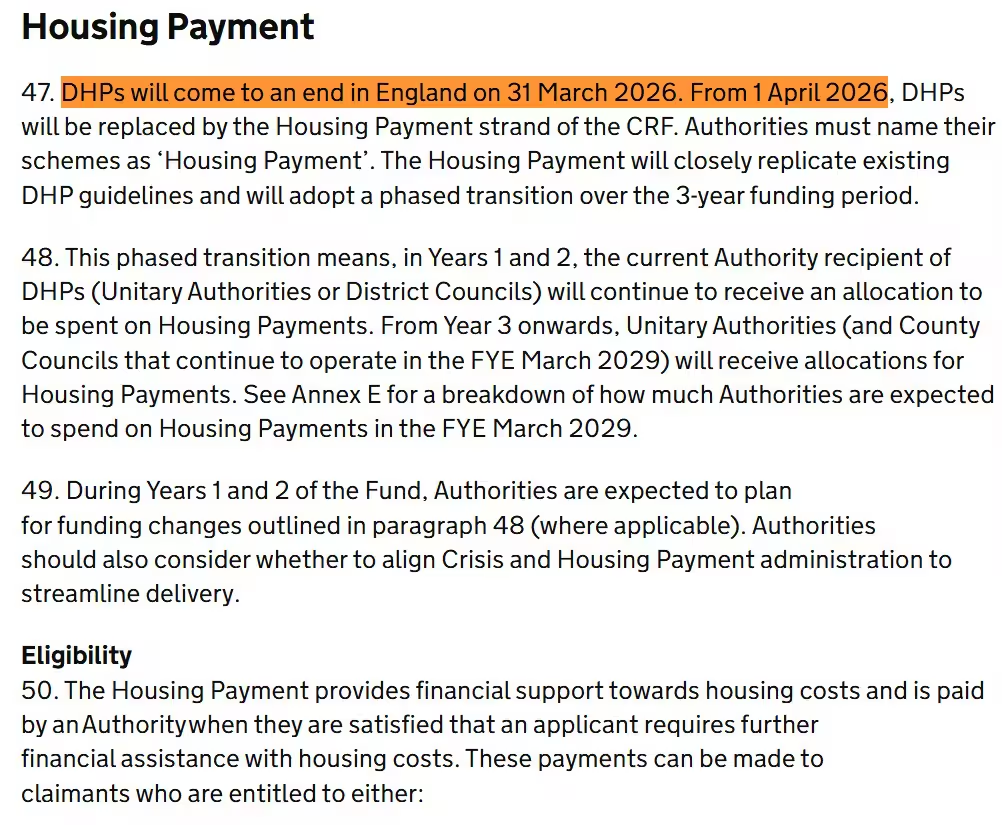
DWP’s proposed 2027/28 Housing Benefit rates, showing the increases in personal allowances and selected disability or caring premiums.
Will Local Housing Allowance Increase in 2027?
No general increase is planned for 2027/28.
The government confirmed in its October 2026 uprating statement that Local Housing Allowance rates would remain at existing levels for another year.
This means the LHA cash rates originally introduced in April 2024 continue to determine the maximum recognised rent for most qualifying private tenants in 2027/28.
LHA is particularly important because it establishes the maximum private rent normally considered when calculating Housing Benefit or Universal Credit housing costs.
It depends on:
- The Broad Rental Market Area (BRMA) covering the property.
- The number of bedrooms the household qualifies for.
- Whether the shared accommodation restriction applies.
- Any qualifying exemptions or additional bedroom entitlements.
The government’s earlier policy was designed around the 30th percentile of local rents, but freezing LHA means existing rates are not automatically recalculated to keep pace with current rental prices.
The Social Security Advisory Committee’s November 2026 analysis reported that the average weekly LHA rate in England was £184.40, approximately 8% below the £200.54 average that would have applied using the 2025/26 30th-percentile rent figures.
That comparison indicates an important structural gap between rental assistance and prevailing housing costs.
Housing campaign group Generation Rent also criticised the continued freeze.
Holly Williamson, the organisation’s chief executive, said in its October 2026 Budget response:
Homes are the foundations of our lives, so it is hugely disappointing the government has maintained the freeze of Local Housing Allowance.
Our financial interpretation is that the freeze creates a particularly difficult position for tenants whose rent increases while their eligible housing support remains unchanged.
For example, consider someone paying £1,100 per month whose applicable LHA limit is also £1,100.
If their landlord increases the rent by 10% to £1,210, while the LHA ceiling stays frozen, they face a new £110 monthly shortfall.
That equals £1,320 annually, even before considering any other changes to their benefit entitlement.
Tenants facing an increase should understand how much a landlord can increase rent and whether the proposed increase follows the applicable legal process.
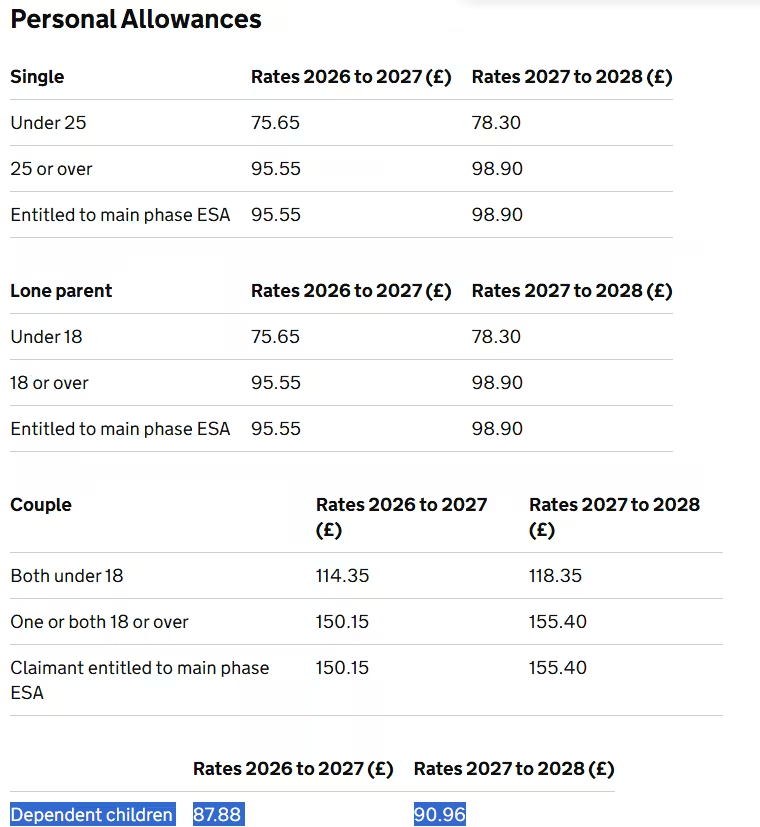
Official October 2026 parliamentary statement confirming that Local Housing Allowance rates and the benefit cap will not increase for 2027/28.
How Much Housing Benefit Can I Get in London in 2027?
Housing assistance varies considerably across London because different rental market areas have different Local Housing Allowance limits.
A tenant in Central London may have a higher LHA rate than a similar household in Outer South London.
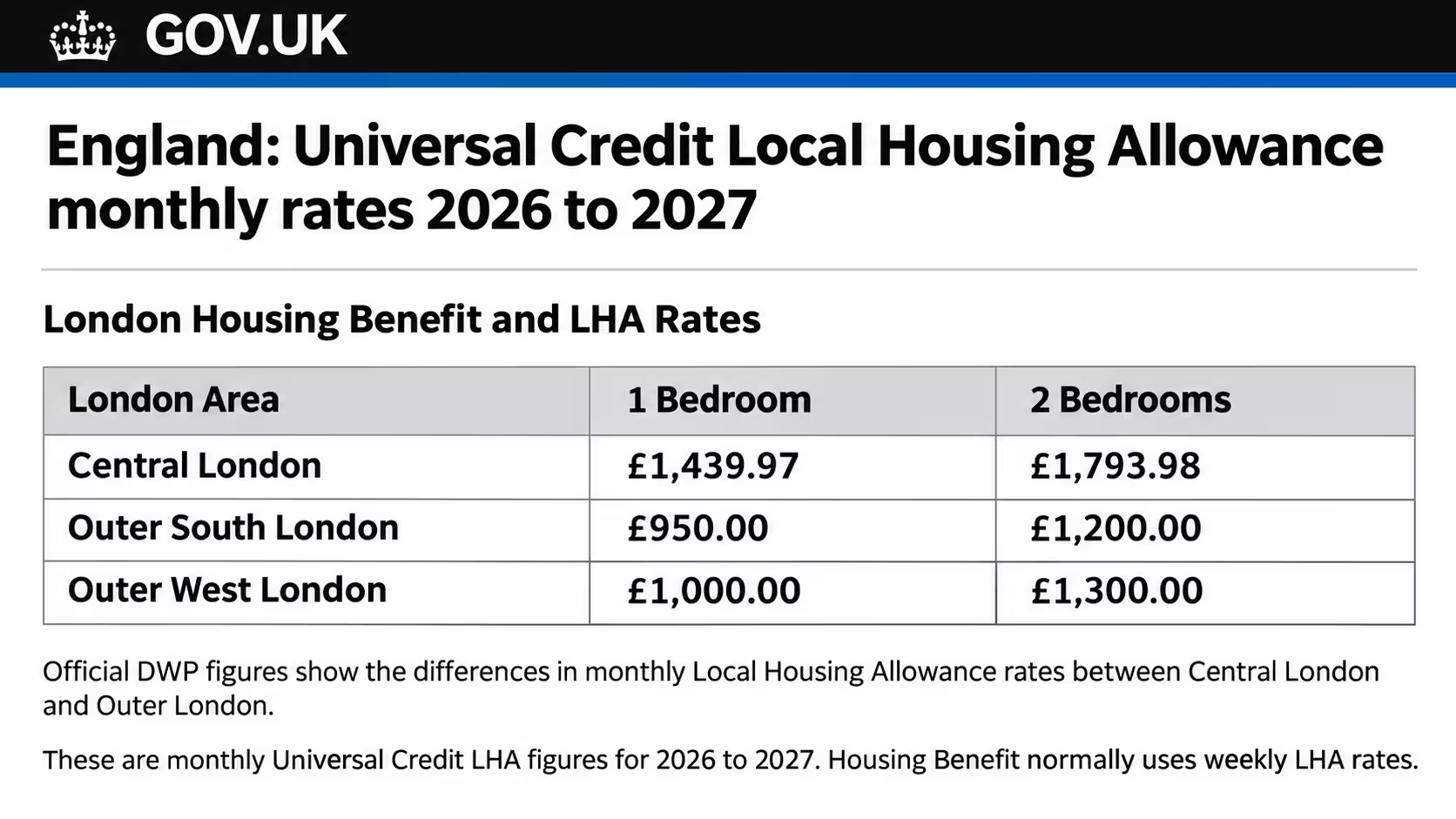
The following table shows selected published monthly Universal Credit LHA benchmarks from 2026/27. These underlying LHA levels are being carried forward into 2027/28.
| London Rental Market Area | Shared Accommodation | One Bedroom | Two Bedrooms |
| Central London | £829.83 | £1,439.97 | £1,793.98 |
| Outer West London | £576.33 | £1,000.00 | £1,300.00 |
| Outer South London | £569.33 | £950.00 | £1,200.00 |
| Outer East London | £561.33 | £1,200.00 | £1,400.00 |
| Outer North London | £595.00 | £1,150.00 | £1,400.00 |
These are official monthly Universal Credit LHA benchmarks, used here to illustrate geographical differences. Housing Benefit normally uses weekly LHA figures, so actual Housing Benefit calculations must use the applicable weekly rate and entitlement rules.
A single person qualifying for the one-bedroom rate in Central London has a monthly LHA benchmark of £1,439.97.
The equivalent benchmark in Outer South London is £950.
That is a difference of £489.97 per month, or approximately £5,879.64 annually.
The difference does not mean Central London tenants automatically receive more Housing Benefit. Their income, savings, contractual rent and other circumstances still determine the final award.
It also matters that London borough boundaries do not always match Broad Rental Market Area boundaries.
Claimants must check the BRMA applying to their actual property postcode, not simply assume their borough’s name determines their rate.
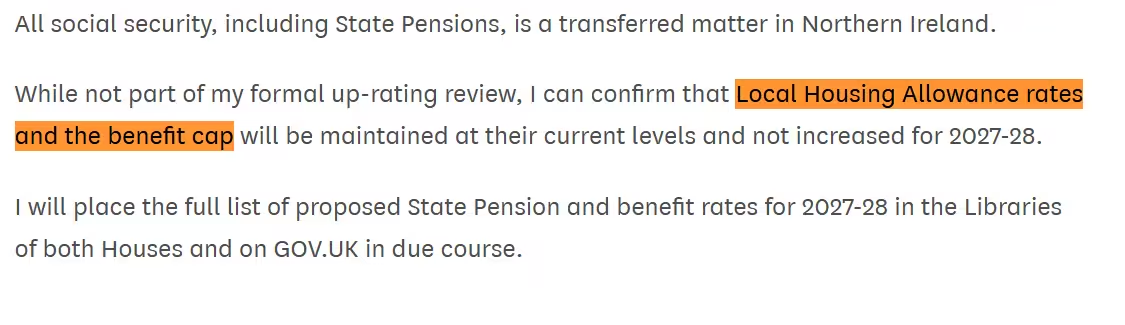
Official DWP 2026/27 monthly LHA table showing Central London, Outer South London and Outer West London rental support limits.
How Much of My Rent Could Housing Benefit Cover?
To understand the financial impact more clearly, we calculated five hypothetical rental situations using the published monthly LHA benchmarks.
These comparisons show the proportion of contractual rent that could potentially be recognised under the LHA ceiling, rather than guaranteed final benefit payments.
| Household Scenario | Monthly Rent | LHA Benchmark | Potential Rent Coverage | Monthly Shortfall |
| Single person, one-bedroom rate, Central London | £1,850 | £1,439.97 | 77.8% | £410.03 |
| Single person, one-bedroom rate, Outer South London | £1,200 | £950.00 | 79.2% | £250.00 |
| Family, two-bedroom rate, Central London | £2,200 | £1,793.98 | 81.5% | £406.02 |
| Single person under 35, shared rate, Outer West London | £1,200 | £576.33 | 48.0% | £623.67 |
| Pensioner, one-bedroom rate, Outer South London | £900 | £950.00 | 100% | £0 |
The calculations assume the stated bedroom entitlement, no relevant LHA exemption that changes the rate, and that the stated rent is otherwise eligible.
They do not account for means-testing or additional deductions.
Example: Single Pensioner Renting in London
Consider a pensioner living alone in an Outer South London property and paying £900 per month in eligible rent.
The relevant one-bedroom benchmark is £950.
Because their rent is below that limit, the entire £900 could potentially be considered for support.
If they qualify for maximum Housing Benefit and no deductions apply, their award could cover 100% of the eligible rent.
Example: Working-Age Renter Under 35
Consider a 28-year-old single person without dependent children renting a flat in Outer West London for £1,200 per month.
If they are subject to the shared accommodation restriction, the relevant monthly LHA benchmark is £576.33.
This represents only 48% of the rent.
The difference is £623.67 per month, equivalent to £7,484.04 annually.
For most people in this situation, the relevant benefit would be Universal Credit rather than a new Housing Benefit claim.
Certain people qualify for exemptions from the shared accommodation restriction, including some disability benefit recipients, care leavers and people meeting specific homelessness-related conditions.
These examples show why tenants should work out how much rent they can realistically afford before signing a tenancy agreement.
A property can fall within someone’s apparent rental budget while still leaving a substantial gap between their rent and the housing support available.
How Is Housing Benefit Calculated for Council and Housing Association Tenants?
Council and housing association tenants are generally assessed using eligible rent rather than private-sector LHA rates.
However, the amount recognised may be reduced if a working-age claimant occupies more bedrooms than the rules permit.
This is commonly called the bedroom tax or removal of the spare room subsidy.
The standard reductions are:
| Spare Bedrooms | Eligible Rent Reduction | Percentage Remaining |
| None | 0% | 100% |
| One | 14% | 86% |
| Two or more | 25% | 75% |
For example, consider a qualifying social housing tenant paying £200 per week in eligible rent.
With one spare bedroom:
£200 × 14% = £28 reduction.
The rent remaining for the benefit calculation is £172 per week.
With two or more spare bedrooms:
£200 × 25% = £50 reduction.
The rent remaining is £150 per week.
These are maximum eligible-rent calculations before the claimant’s income and other circumstances are considered.
The spare-bedroom reduction generally does not apply to people who have reached State Pension age.
Additional exemptions may also apply for qualifying disability needs, overnight carers, foster carers and some other household circumstances.
The bedroom rules should therefore be checked against actual household requirements rather than simply counting unused rooms.
How Much Housing Benefit Can I Get If I Am Working?
Employment does not automatically prevent someone who remains eligible for Housing Benefit from receiving assistance.
However, earnings can reduce the amount awarded.
Housing Benefit is means-tested. The council calculates assessable income after applicable disregards and compares it with the household’s applicable amount.
Where income exceeds that applicable amount, Housing Benefit is normally reduced by 65p for each additional £1 of assessed weekly income above the threshold.
For example:
| Calculation | Weekly Amount |
| Maximum Housing Benefit before income taper | £180 |
| Assessable excess income | £50 |
| Reduction at 65% | £32.50 |
| Illustrative Housing Benefit after taper | £147.50 |
The calculation is:
- £50 × 65% = £32.50.
- £180 − £32.50 = £147.50.
The resulting £147.50 is a simplified example before any other applicable deductions.
Importantly, assessable excess income is not the same as gross salary.
The council may apply earnings disregards, recognise certain childcare costs and consider other income-related rules.
The 2027/28 proposed Housing Benefit rates continue to include various earnings disregards, depending on household circumstances.
For someone making a new claim for ordinary accommodation, Universal Credit will generally apply instead.
Universal Credit uses a different earnings calculation, including a 55% taper on relevant earnings above any applicable work allowance.
Anyone comparing Universal Credit rent payments in 2027 with Housing Benefit should not assume both benefits use the same income formula.
How Much Housing Benefit Can I Get With Savings?
Housing Benefit entitlement can be affected by savings, investments and other countable capital.
The rules are different for pension-age and working-age claimants.
For standard working-age Housing Benefit assessments, the first £6,000 is generally disregarded.
For pension-age claimants, the usual capital disregard is £10,000.
| Countable Savings | Working-Age Housing Benefit | Pension-Age Housing Benefit |
| £5,000 | Normally no capital-related reduction | Normally no capital-related reduction |
| £8,000 | Tariff income may apply | Normally no capital-related reduction |
| £10,000 | Tariff income may apply | Normally no capital-related reduction |
| £12,000 | Tariff income may apply | Tariff income may apply |
| £16,000 | Upper capital-limit rules apply | Upper capital-limit rules apply |
| Above £16,000 | Usually prevents entitlement | Usually prevents entitlement unless an exception applies |
The upper capital limit generally remains £16,000 in 2027/28.
However, Housing Benefit claimants receiving Pension Credit Guarantee Credit are subject to special rules, and the ordinary £16,000 upper limit does not apply in the same way.
For working-age Housing Benefit, tariff income is generally calculated at £1 per week for every £250, or part of £250, above the disregard.
For pension-age Housing Benefit, the corresponding calculation is generally £1 per week for every £500, or part of £500, above the disregard.
For example, a pensioner with £12,000 in countable savings would have £2,000 above the usual £10,000 disregard.
£2,000 ÷ £500 = 4.
The resulting tariff income would be £4 per week.
This does not mean they receive £4 interest or must withdraw £4 every week. It is a figure used in the means-tested calculation.
Our assessment is that pensioners close to the £10,000 capital threshold should examine their actual countable capital carefully.
Certain assets and payments can be disregarded under specific benefit rules, so the amount appearing in bank accounts does not always tell the entire story.
Can Pensioners Get Their Full Rent Paid in 2027?
Yes. Qualifying pensioners can receive Housing Benefit covering their full eligible rent when they satisfy the relevant conditions.
Pensioners receiving the Guarantee Credit element of Pension Credit generally qualify for maximum Housing Benefit, subject to applicable rent restrictions and deductions.
The Pension Credit Standard Minimum Guarantee is increasing in April 2027.
| Household | 2026/27 Weekly Guarantee | 2027/28 Weekly Guarantee |
| Single pensioner | £238.00 | £247.30 |
| Couple | £363.25 | £377.40 |
These figures represent minimum income guarantees under Pension Credit, not Housing Benefit payment amounts.
A higher State Pension may also affect a pensioner’s means-tested position.
For someone not receiving Guarantee Credit, an increase in pension income could reduce Housing Benefit entitlement, even where personal allowances also rise.
This makes it important to consider Pension Credit and Housing Benefit together.
For instance, a qualifying pensioner receiving Pension Credit Guarantee Credit with eligible council rent of £160 per week could potentially receive the full £160 in Housing Benefit.
However, if that pensioner rents privately and their contractual rent is above the LHA ceiling, the higher rent will not necessarily be covered.
The wider household budget should also consider Council Tax Reduction, which is administered separately from Housing Benefit.
Will Living With Another Adult Reduce My Housing Benefit?
It can.
Housing Benefit may be reduced when another adult who is not your partner lives in the property and is treated as a non-dependant.
This can include an adult son, daughter, relative or another qualifying adult household member.
The council may apply a deduction based on that person’s earnings and circumstances.
The DWP’s proposed 2027/28 weekly non-dependant deductions are:
| Non-Dependant’s Gross Weekly Income | 2027/28 Weekly Deduction |
| Less than £199 | £21.10 |
| £199–£289.99 | £48.50 |
| £290–£378.99 | £66.60 |
| £379–£503.99 | £108.90 |
| £504–£628.99 | £124.05 |
| £629 or more | £136.05 |
The table covers the standard remunerative-work deduction bands.
Different rules apply to some non-working adults, and exemptions can prevent a deduction entirely.
For example, deductions may not apply where the claimant or their partner receives certain qualifying disability-related benefits, or where the other adult falls within an exempt category.
A pensioner living with an employed adult child should therefore not assume the child’s entire income is included as their own.
Instead, the authority considers whether a non-dependant deduction is required and which rate applies.
This distinction can materially change the household’s final Housing Benefit payment.
Can the Benefit Cap Reduce Housing Benefit in 2027?
Yes, for working-age households where the benefit cap applies.
The benefit cap restricts the combined amount of certain welfare benefits a household can receive.
The government confirmed that the benefit cap will remain frozen in 2027/28.
| Household | Greater London Monthly Cap | Rest of Great Britain Monthly Cap |
| Couple or single parent with qualifying children | £2,110.25 | £1,835.00 |
| Single adult without children | £1,413.92 | £1,229.42 |
These figures are overall benefit-cap thresholds, not maximum Housing Benefit payments.
A household with children may qualify for a relatively high LHA rate but still face a restriction on overall benefit entitlement.
Pension-age claimants are generally outside the benefit cap.
Exemptions can also apply for certain disability-related benefits, qualifying caring circumstances and other specific situations.
Our interpretation is that larger households should assess the LHA ceiling and overall benefit cap separately.
The highest possible bedroom-rate allowance does not automatically translate into an equally high final payment.
What Happens If Housing Benefit Does Not Cover My Rent?
A rent shortfall occurs when the amount of financial assistance awarded is lower than the rent payable to the landlord.
For example, if someone pays £1,500 per month and receives the equivalent of £1,100 towards rent, the monthly shortfall is £400.
Over 12 months, the difference is £4,800.
Before accepting that shortfall, tenants should check whether the correct income, capital, household circumstances and eligible rent figures were used.
They should also check whether any disability-related exemption, additional bedroom entitlement or non-dependant deduction has been assessed correctly.
Can You Get Extra Housing Support in England?
From 1 April 2026, the government replaced Discretionary Housing Payments in England with the Housing Payment element of the Crisis and Resilience Fund.
This additional local authority assistance can help eligible claimants who face financial difficulties meeting housing costs.
Depending on the authority’s assessment and scheme rules, eligible expenses can include:
- Shortfalls caused by frozen LHA limits.
- Shortfalls associated with the benefit cap.
- Spare-bedroom-related shortfalls.
- Rent deposits and rent in advance.
- Certain removal or tenancy setup costs.
Housing Payments are discretionary and should not be treated as guaranteed additional monthly income.
Applicants normally need to be entitled to Housing Benefit or Universal Credit with qualifying rental housing costs.
Local authorities consider the individual household’s financial circumstances, the support required and their scheme rules.
Discretionary Housing Payments remain available under separate arrangements in Wales and Scotland.
Where a household is repeatedly paying a large shortfall, longer-term financial planning may also be required.
Reviewing weekly and monthly rental costs can prevent budgeting mistakes.
For example, £350 per week is approximately £1,516.67 per calendar month, not £1,400.
Similarly, understanding what PCM means in rent helps ensure that advertised rental prices and benefit payment periods are compared correctly.
Official DWP Crisis and Resilience Fund guidance showing how Housing Payments can support eligible households facing rent shortfalls and other qualifying housing costs.
How Can I Calculate My Housing Benefit Entitlement Accurately?
A reliable Housing Benefit estimate requires more than knowing your monthly rent.
Our analysis suggests following a practical calculation process before submitting a claim.
- Step 1: Confirm eligibility: Establish whether Housing Benefit is the correct benefit for your circumstances or whether you should be assessed through Universal Credit.
- Step 2: Identify your eligible rent: Check the amount payable to the landlord and remove any charges not eligible for Housing Benefit.
- Step 3: Check your LHA rate if renting privately: Use the property’s postcode, rental market area and relevant bedroom entitlement.
- Step 4: Review income and savings: Include applicable pensions, earnings, benefits and countable capital.
- Step 5: Check household deductions: Consider whether non-dependants, spare bedrooms or other restrictions affect the award.
- Step 6: Calculate the shortfall: Compare your potential assistance with your contractual rent, using consistent weekly or monthly periods.
- Step 7: Use a recognised benefit calculator: GOV.UK identifies free calculators from Turn2us, entitledto and Policy in Practice.
- Step 8: Confirm the outcome with your local authority: Only the formal benefit assessment establishes the actual award.
Someone planning to move can also review how to rent a home in London to understand the tenancy process and other financial commitments.
The most important consideration is the amount of rent the household will remain responsible for after financial assistance has been calculated.
How Do I Apply for Housing Benefit in 2027?
People who qualify for a new Housing Benefit claim generally apply through their local council.
Eligible pensioners may also be able to claim through the Pension Credit application process.
The authority will usually request information about the property, tenancy, rent, income and household.
Applicants should prepare a tenancy agreement or other proof of rent, relevant income evidence, savings information and details of people living at the address.
Claims should be made promptly because backdating is subject to specific rules and is not always available automatically.
After a decision is made, the council issues an award notice explaining the calculation.
If the payment appears incorrect, the claimant can request an explanation or challenge the decision through the appropriate Housing Benefit review and appeal procedure.
This can be especially important when the authority has used an incorrect LHA rate, misunderstood household circumstances or applied a deduction that should not have been included.
Changes to income, rent, capital or household composition should also be reported promptly.
What Should Housing Benefit Claimants Expect During 2027?
The combination of rising benefit allowances and frozen LHA rates creates different outcomes for different households.
Some pensioners and other existing Housing Benefit recipients may benefit from higher applicable amounts.
However, private tenants whose contractual rent exceeds their LHA limit will not automatically see that shortfall reduced.
Our analysis highlights three important financial developments.
First, LHA rates remain at their existing cash levels during 2027/28 despite changes in market rents.
Second, proposed Housing Benefit personal allowances and some premiums are increasing, potentially affecting means-tested calculations.
Third, non-dependant deduction rates are also rising, which may offset some of those improvements for affected households.
For private tenants, the main financial challenge continues to be the gap between actual rent and the amount recognised by the benefit system.
Pensioners should review Pension Credit and other entitlements, while working-age tenants should establish whether Universal Credit or an eligible Housing Benefit exception applies.
The best estimate is therefore not the headline LHA ceiling or the maximum possible Housing Benefit payment.
It is the final amount that remains after eligibility, income, capital and household deductions have been assessed.
Final Thoughts
Housing Benefit remains an important form of rental support in 2027, particularly for pensioners and people living in qualifying temporary or supported accommodation.
Our review of the 2026 changes and proposed 2027/28 benefit rates shows that some claimants may see improvements in their means-tested assessment, while private renters continue to face frozen Local Housing Allowance limits.
The financial impact depends on the household rather than a single national payment figure.
Before relying on an estimated award, confirm your benefit eligibility, calculate your eligible rent and check any relevant deductions.
For London tenants, where private rents can substantially exceed available housing support, understanding the potential shortfall is especially important when deciding whether a tenancy remains affordable.
Frequently Asked Questions
How much Housing Benefit can a single person get in 2027?
There is no fixed amount for a single person. The award depends on eligible rent, income, savings, age, accommodation and household circumstances. A qualifying single pensioner could receive their full eligible rent, while a working-age private renter will usually need Universal Credit instead.
Can Housing Benefit pay 100% of my rent?
Yes, where the whole rent is eligible and the claimant qualifies for maximum assistance without further reductions. However, LHA restrictions, ineligible charges and other deductions can create shortfalls.
How much Housing Benefit can I get if I am unemployed?
Unemployment does not guarantee maximum Housing Benefit. Most working-age people making new claims should apply for Universal Credit housing costs. Eligible Housing Benefit claimants must still satisfy the financial and household rules.
Can I claim Housing Benefit with £10,000 in savings?
Potentially. Working-age Housing Benefit generally takes account of capital above £6,000, while pension-age Housing Benefit normally disregards the first £10,000. Other eligibility conditions and capital exceptions apply.
Will Housing Benefit increase in April 2027?
Some Housing Benefit personal allowances and premiums are proposed to increase in April 2027. However, Local Housing Allowance cash rates remain frozen for 2027/28, so private rent assistance will not automatically rise with rental prices.
Is Housing Benefit paid weekly or monthly?
Housing Benefit is normally calculated on a weekly basis. Actual payment schedules depend on the type of tenancy, local authority arrangements and whether payments go to the claimant or landlord. Payments may be made fortnightly, four-weekly or monthly in relevant cases.
Can I get Housing Benefit and Universal Credit at the same time?
Certain qualifying temporary or supported accommodation residents can receive Housing Benefit towards rent while receiving Universal Credit for other living expenses. Most ordinary private renters do not receive both for the same housing costs.
What if my Housing Benefit is lower than expected?
Check the award notice for the eligible rent, LHA rate, assessed income, capital and household deductions. If there is an error, ask the council to review its decision. Eligible people facing a rent shortfall may also be able to apply for additional local housing support.
Adam is a London business and news writer at London Insider News, covering local developments, finance, entrepreneurship and the stories shaping businesses and communities across the capital.
More from RENTING

Right to Rent Share Code 2027: How to Get, Generate and Check Your Code Online?
Updated: 4 November 2026 | 2027 Guide A Right to Rent share code is a nine-character…

How Much Housing Benefit Am I Entitled to for Private Renting in 2027? Updated UK and London Guide
If you rent privately in London or elsewhere in the UK, you may qualify for financial…

How Much Can a Landlord Increase Rent in London? 2026 Rules Explained
For most private renters in London, there is no fixed legal percentage cap limiting a landlord…